Educational use only — not medical advice. This is a teaching example and must not be used to guide care of any individual patient. Learn more →

Work Shifting on Autoflow

The classic waveform signature of work shifting on an adaptive mode, and why its clinical significance depends on the patient.
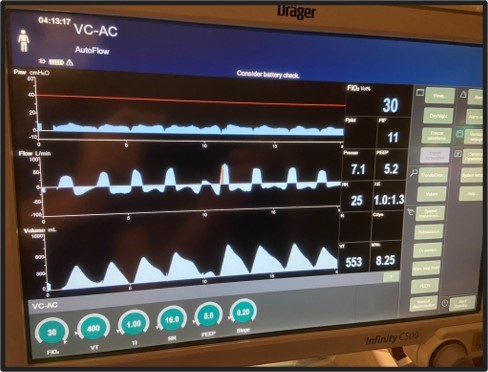
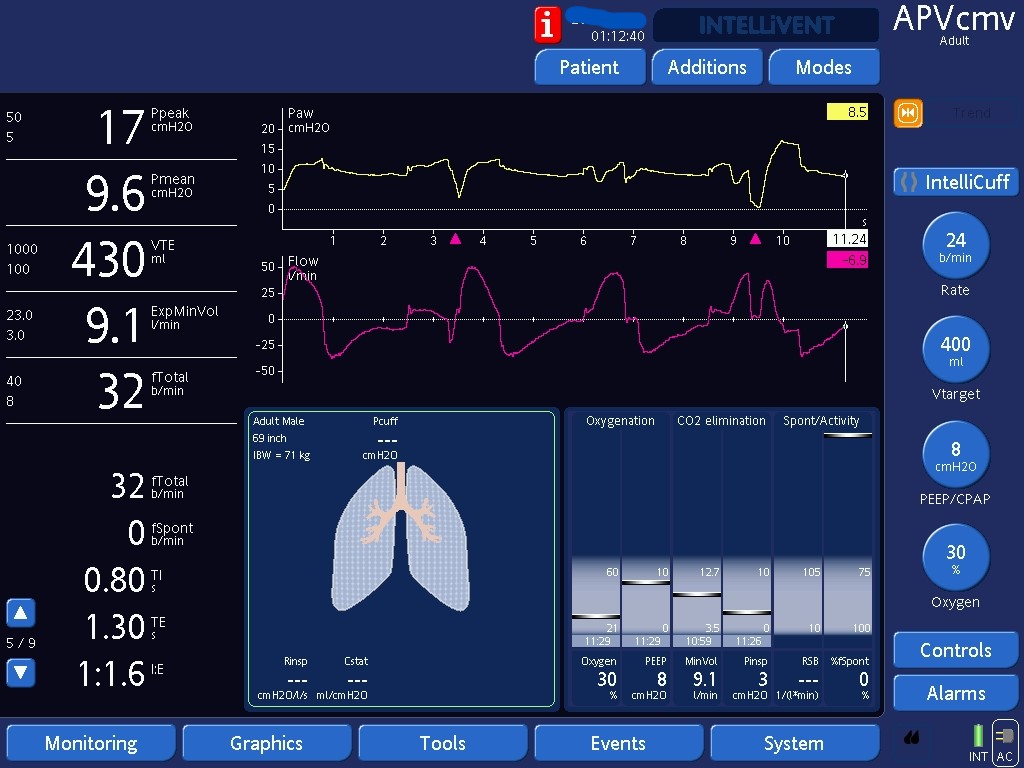
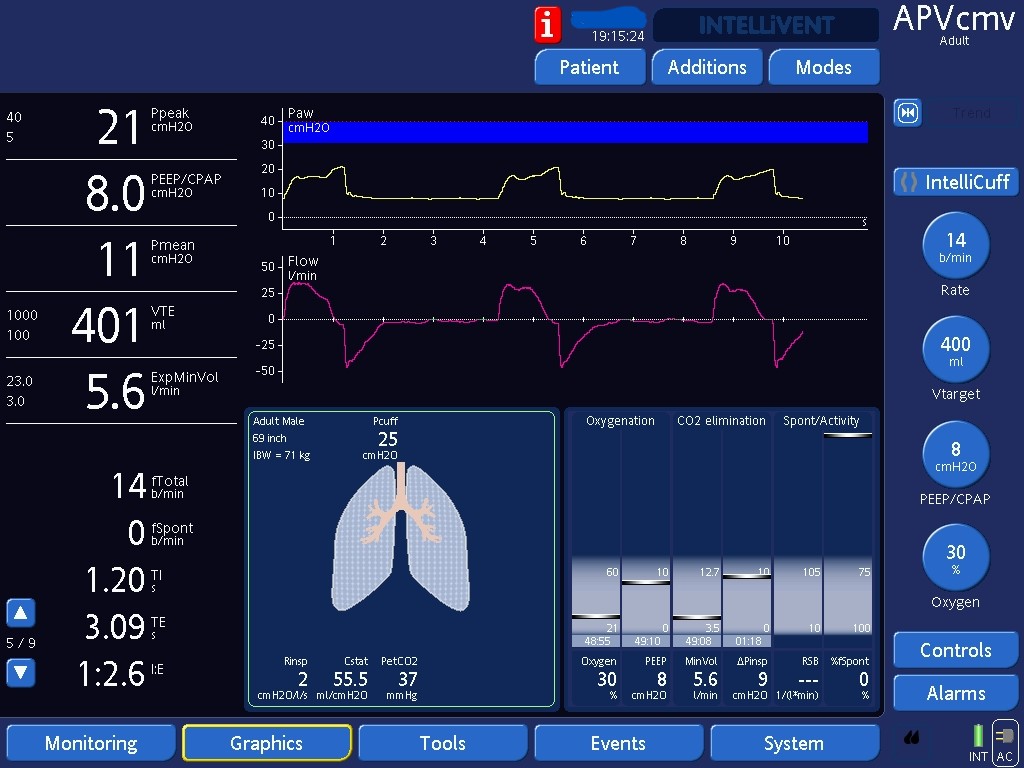
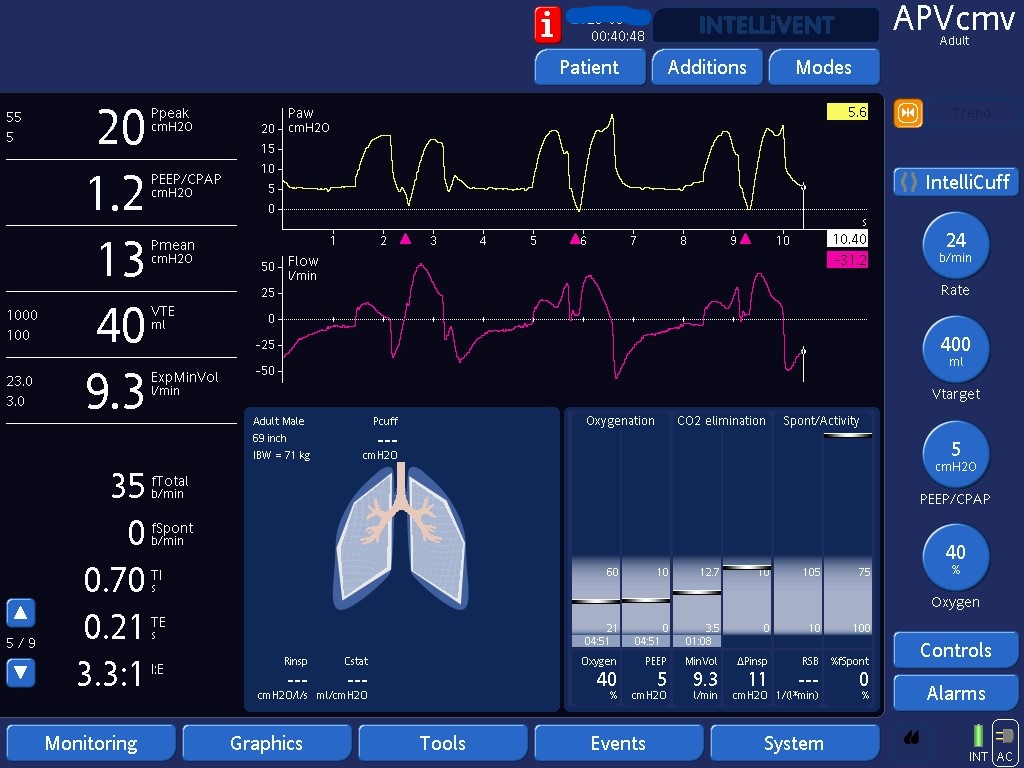
APVWork shiftingM2M5
Fig 1.Note several of the classic features of work shifting in adaptive, pressure controlled modes (APV, PRVC, Autoflow…): 1- inspiratory flow waveform showing a downward instead of the typical upward concavity seen in passive patients indicating patient inspiratory effort; 2- tidal volumes are greater than set target; 3- relatively flat pressure versus time waveform secondary to patient inspiratory effort as well as little positive pressure being applied by the ventilator since tidal volumes are constantly greater than target (on this Drager ventilator, applied pressure above PEEP may be as low 0.1cmH2O in adaptive modes when tidal volumes are continuously greater than target). This patient, intubated for airway protection in the setting of an intracranial hemorrhage, was breathing comfortably, so the clinical significance of work shifting was debatable.
Preview — work in progress