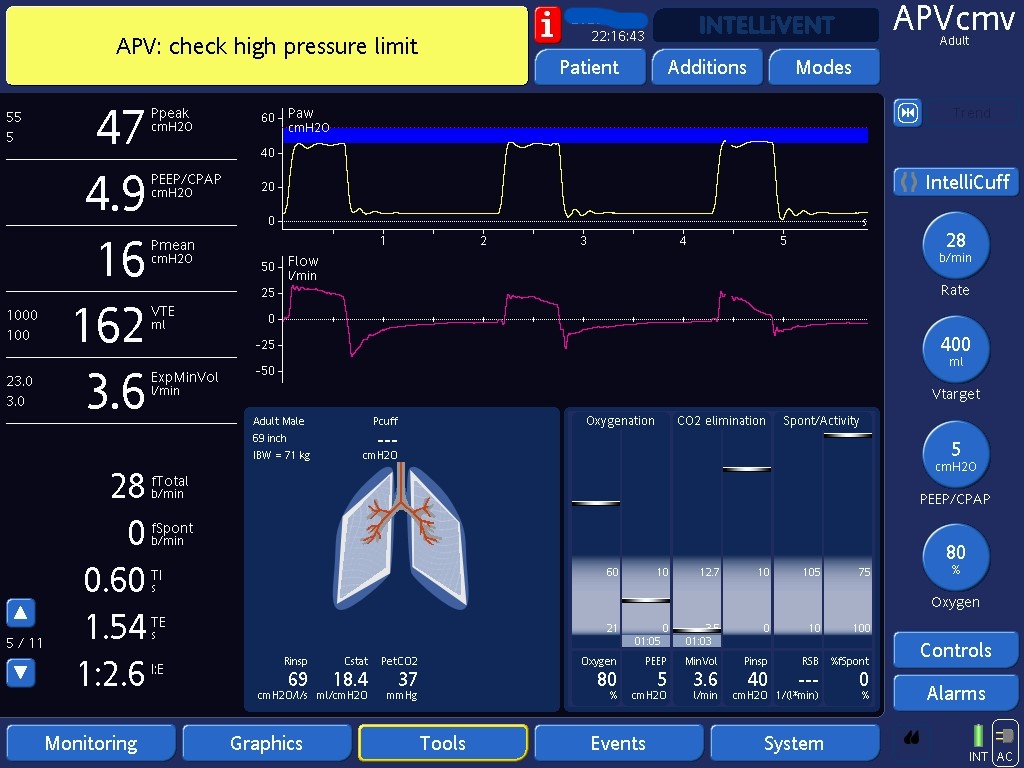
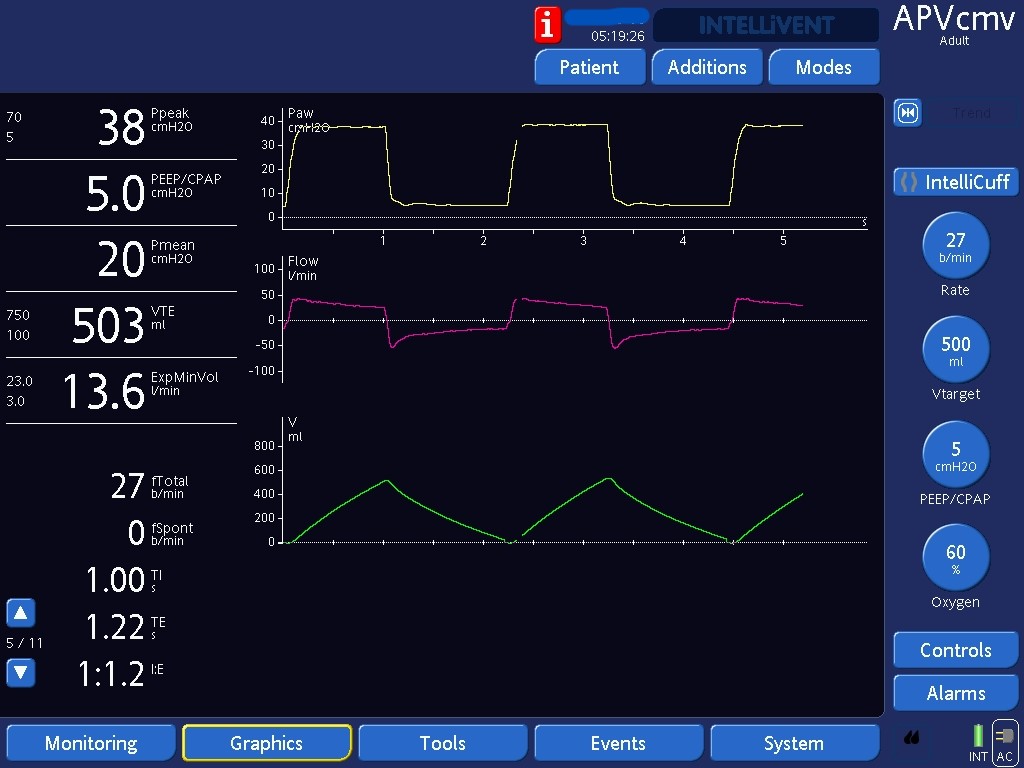
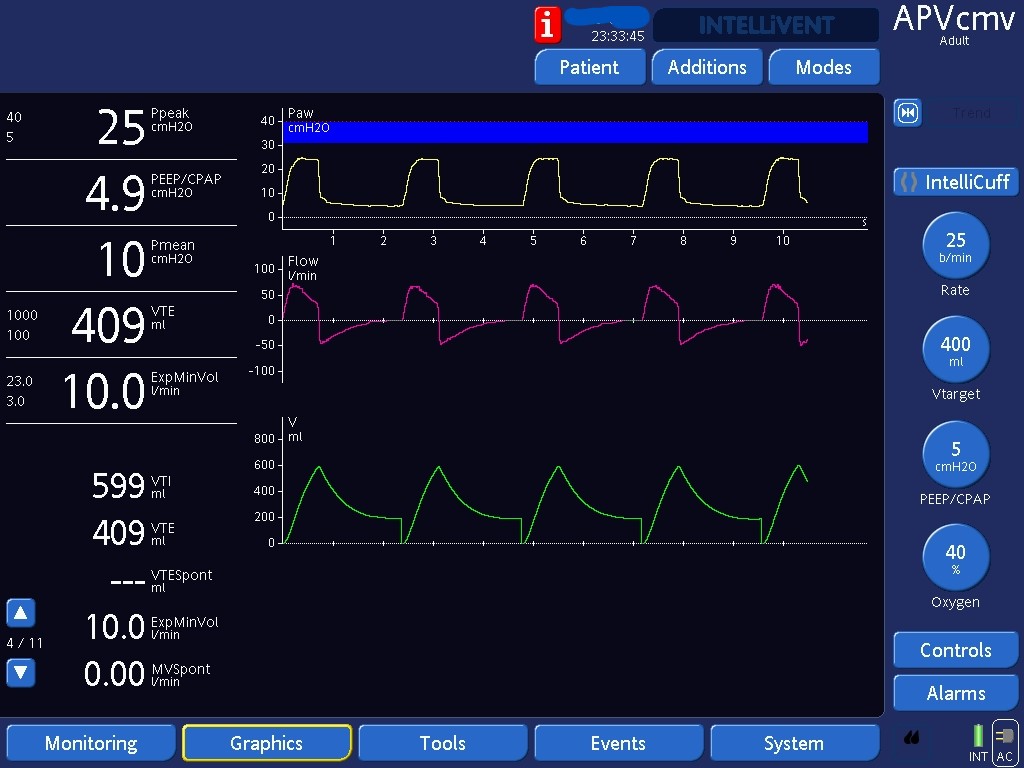
Volume Support
How Volume Support works: it is nothing but pressure support with an adaptive targeting scheme.
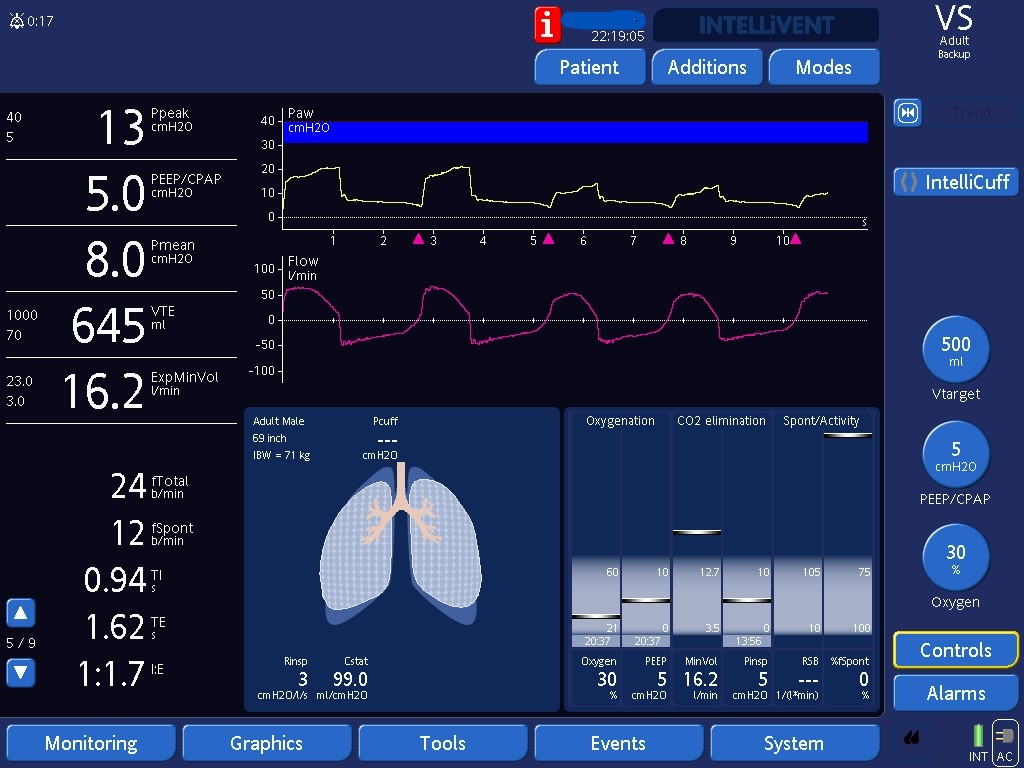
This waveform is from a patient on Volume Support. Volume Support is a mode where all breaths are patient-triggered. The ventilator adjusts the level of applied inspiratory pressure on a breath-by-breath basis to achieve the target tidal volume. Hence, inspiratory pressure varies between breaths depending on patient’s effort, among other factors. Increased patient effort results in higher tidal volumes, leading to a drop in pressures applied by the ventilator.
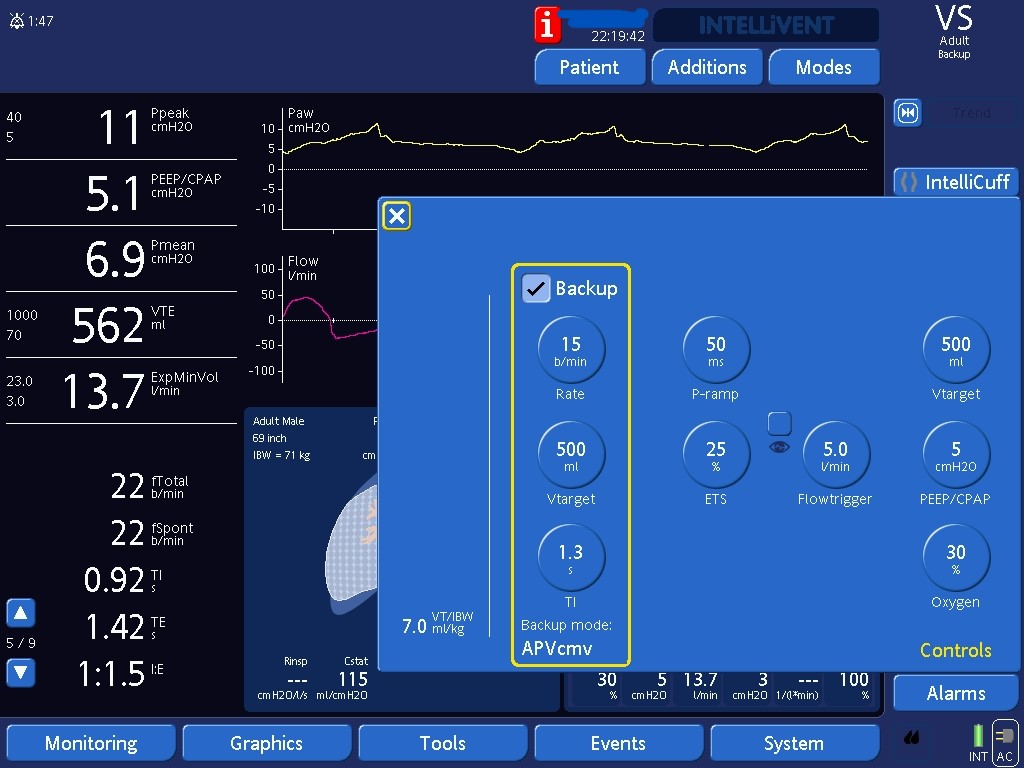
Inspiratory time in volume support is determined by the expiratory trigger sensitivity (ETS). ETS determines when the ventilator cycles from inspiration to expiration, based on the decay of inspiratory flow. In this patient once flow reaches 25% of peak, the ventilator will switch from inspiration to expiration. Increasing ETS shortens inspiratory time, while decreasing ETS prolongs it. As you can see, the only difference between Volume Support and Pressure Support is that the ventilator sets the amount of pressure applied above PEEP on Volume Support to match desired target volumes, whereas the operator has to manually titrate the applied pressure in Pressure Support.