Impact of Leaks on Peak Pressure on APV
How a circuit leak drives up peak pressures on an adaptive mode and can masquerade as worsening mechanics.
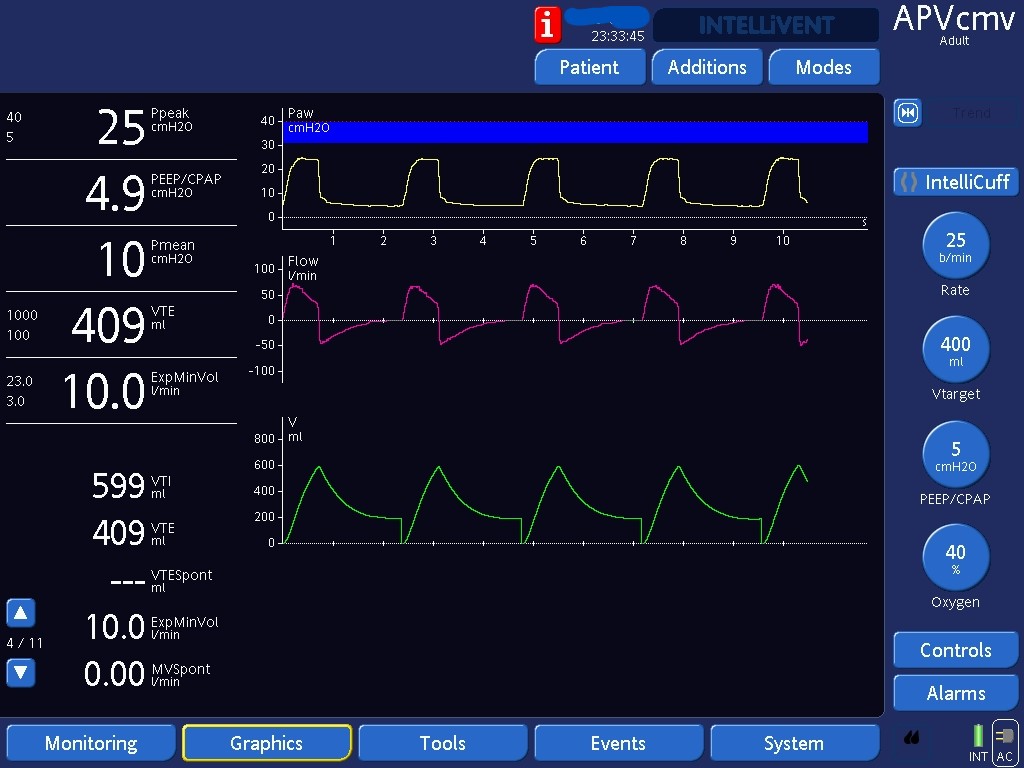
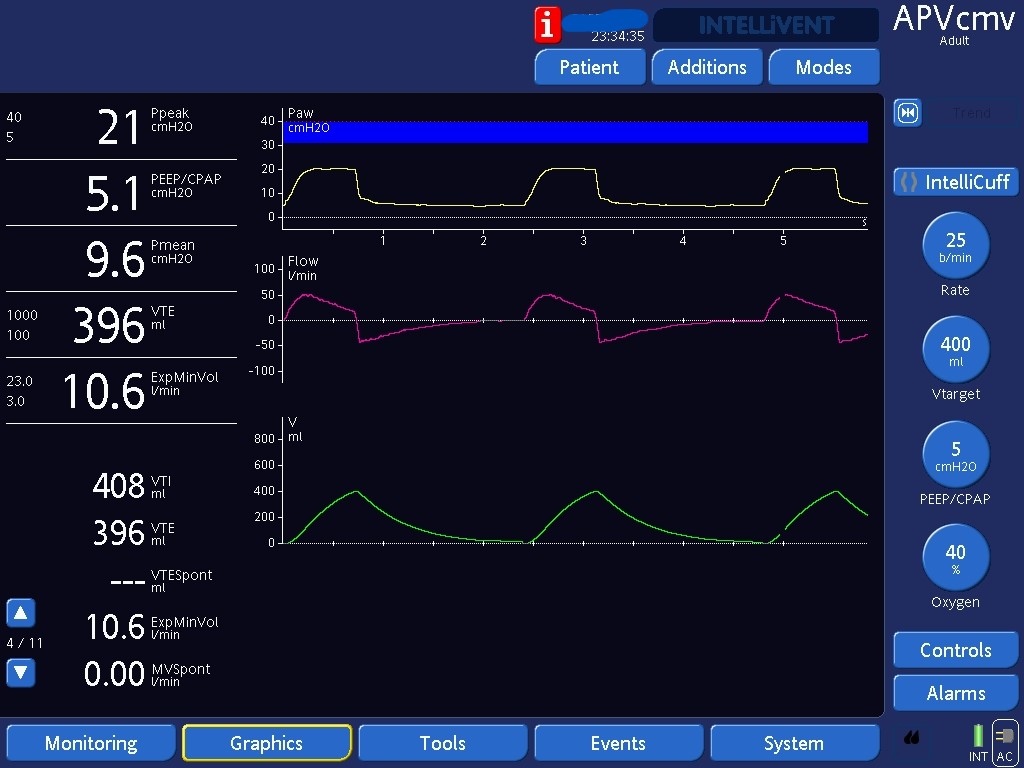
Note in this picture taken only 1 minute after the prior that the leak resolved. We do not see the sharp reset in the descending limb of the volume-time curve before the beginning of a new inspiration. The difference between VTi and VTe has also narrowed significantly. Note how peak pressures dropped from 25 to 21. The reason for this is that on APV the ventilator titrates the amount of pressure applied above PEEP to achieve a target volume. It uses combination of VTi and VTe to compensate for the leak. Therefore, a high leak percentage will lead to an elevation in peak pressures that could erroneously suggest poor respiratory system mechanics (i.e., increased airway resistance or decreased lung/chest wall compliance).
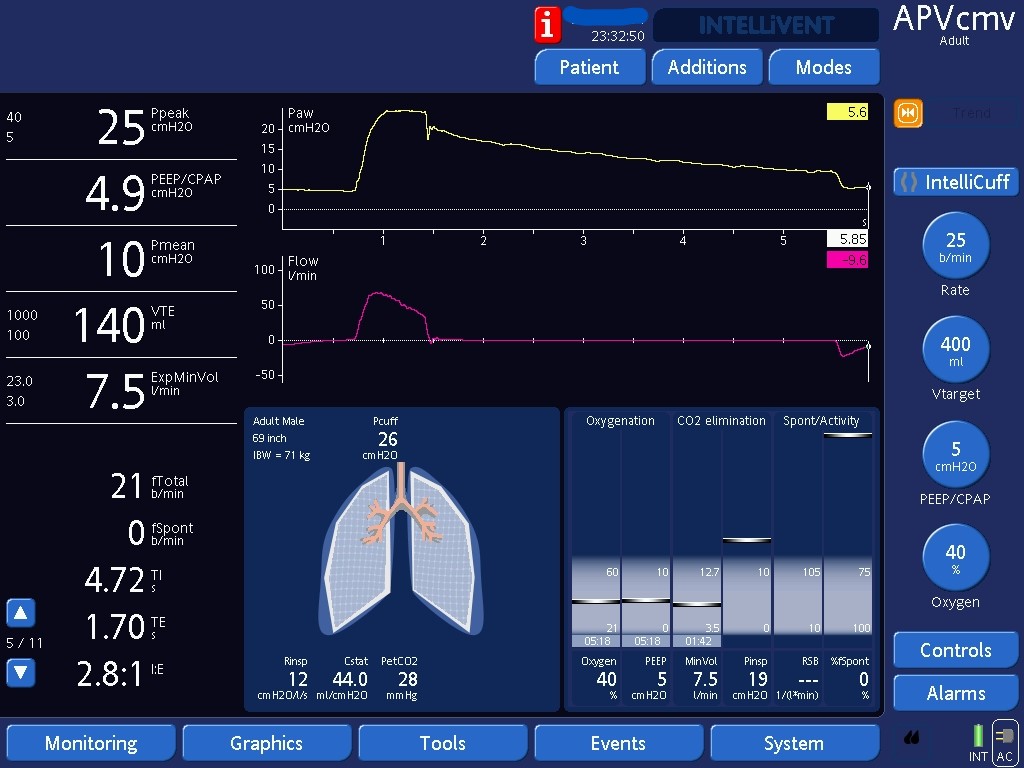
Before fixing the leak, note how this end-inspiratory hold maneuver looks. We do NOT see the typical plateauing in airway pressures. The reason is that while inspiratory and expiratory valves are closed, gas continues to leak from the circuit emptying the lungs. As a consequence, pressures keep dropping despite the hold. This is often a clue to the presence of a leak.