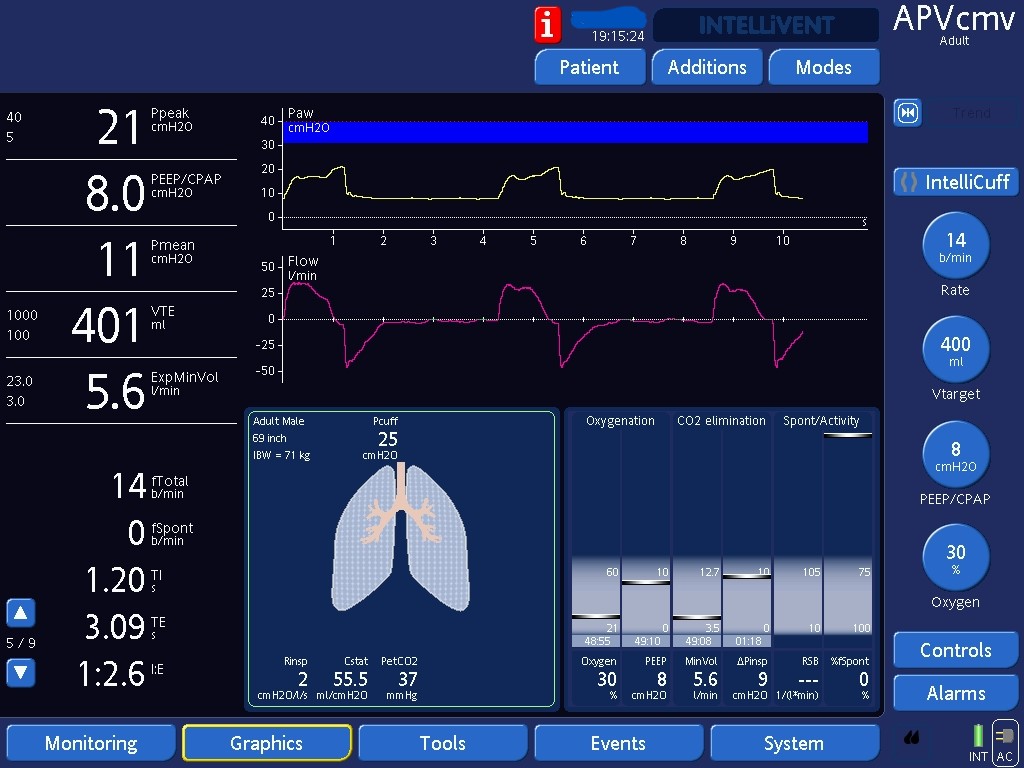
Late and Early Cycle in APV
Contrasting late and early cycling as inspiratory time is adjusted.
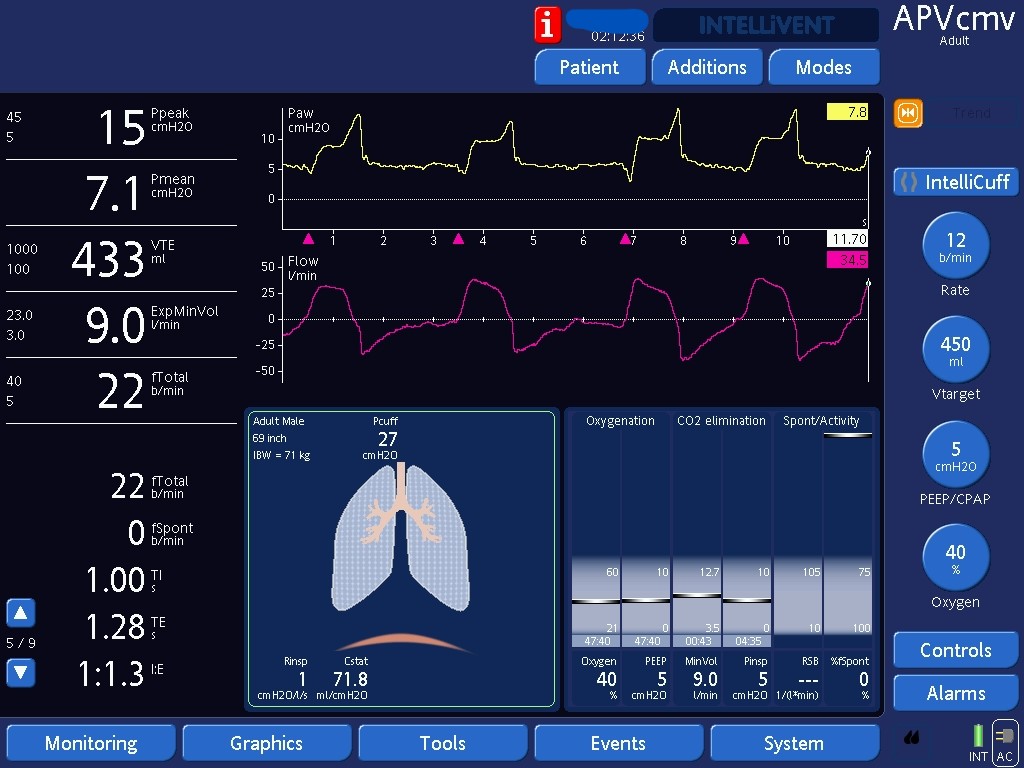
This waveform demonstrates late cycling, when set inspiratory time is longer than the patient’s neural inspiratory time. Note the late peak in the pressure waveform at the end of the inspiratory phase. Not only the patient relaxes their inspiratory muscles, but also likely contracts expiratory muscles resulting in increased airway pressures. Since the cycle variable in APV is inspiratory time, dropping the set inspiratory time would be the next step in management.
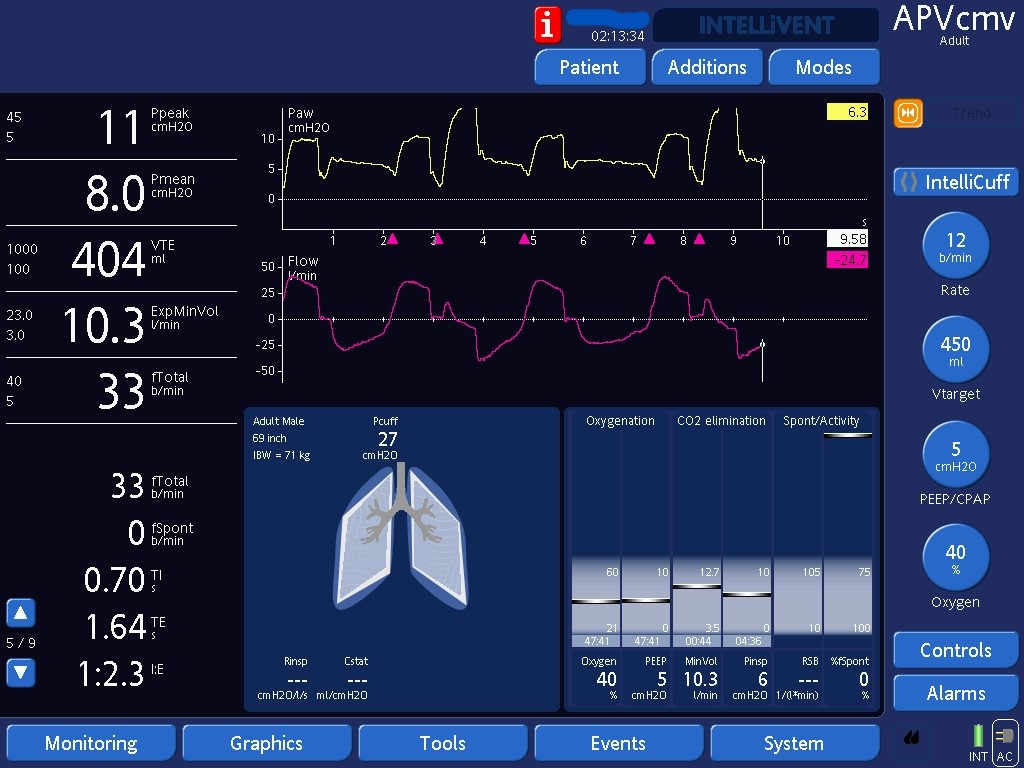
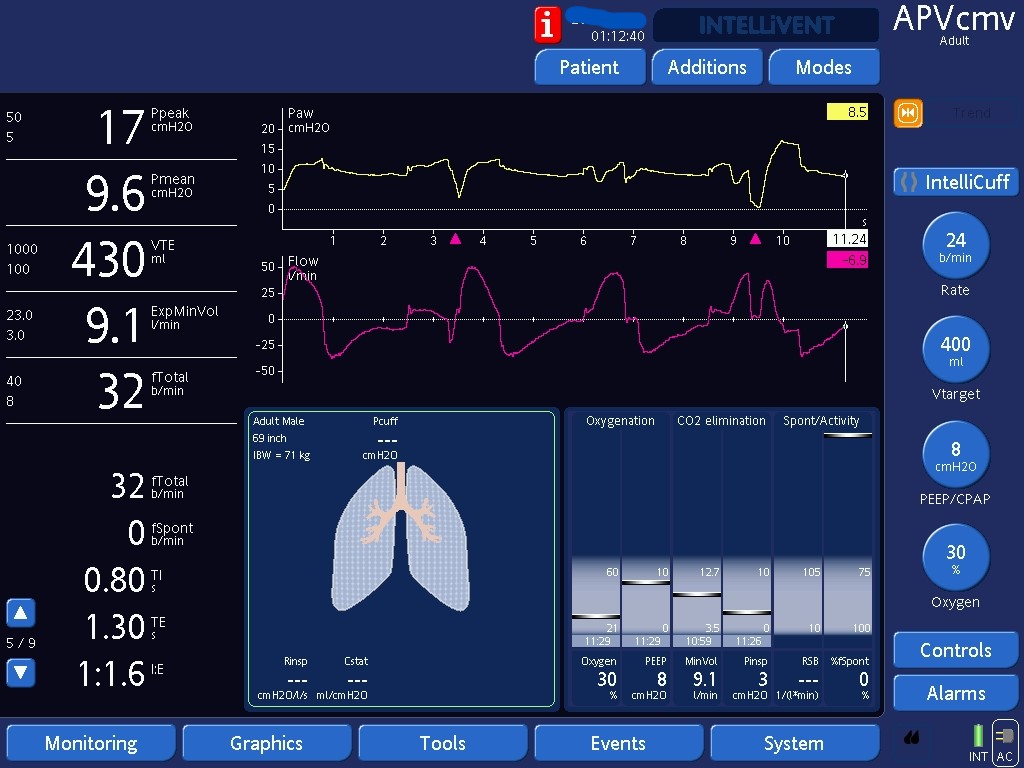
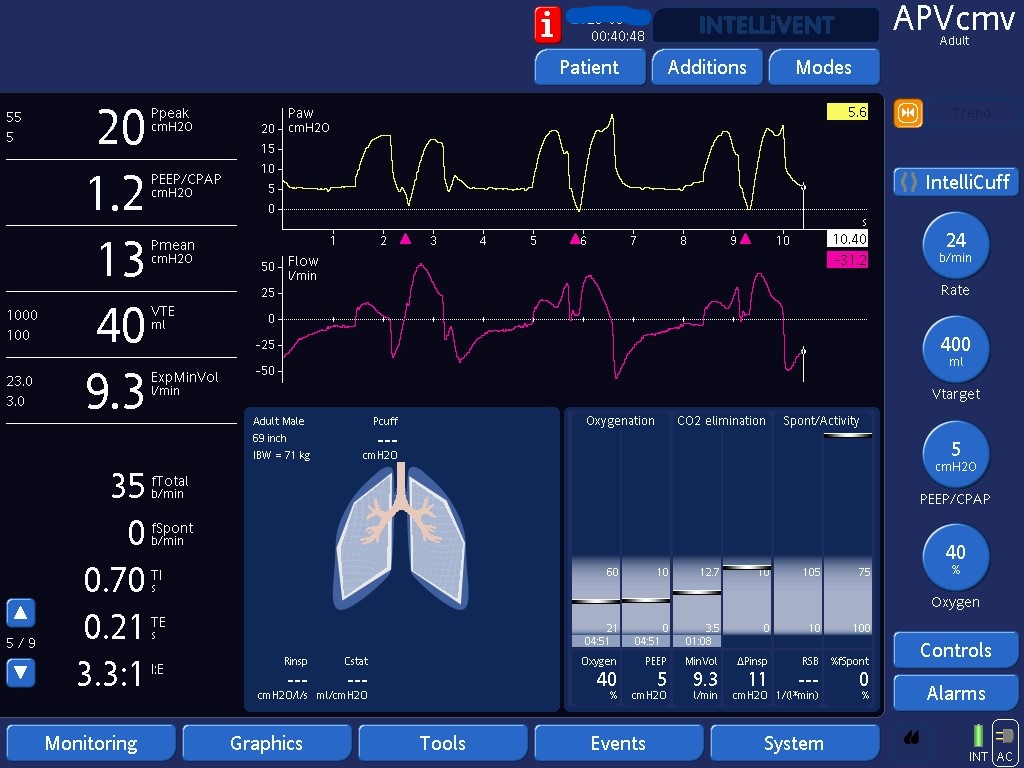
By decreasing the inspiratory time from 1s to 0.7s, the patient developed early cycling with double triggering (also known as breath stacking). Note how inspiratory effort extends to inspiration (after the second breath, for example, you do not even see negative expiratory flows during early expiration). This pattern is different from the double triggering seen in cases of early triggering. While in early triggering the first breath of the double trigger pair is triggered by the ventilator, typically in early cycling, the first breath of the pair is triggered by the patient.