Educational use only — not medical advice. This is a teaching example and must not be used to guide care of any individual patient. Learn more →

Impact of iTime on Peak Pressures on APV

How shortening inspiratory time on an adaptive mode raises peak pressures by forcing higher inspiratory flows.
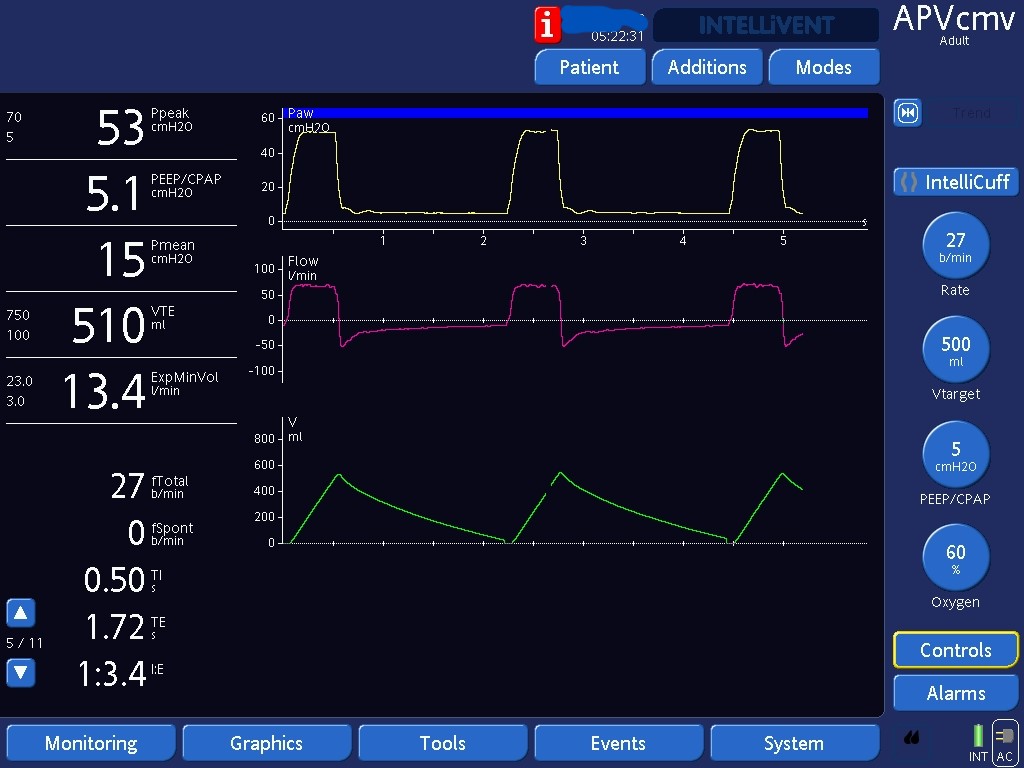
APVMechanicsM2M5
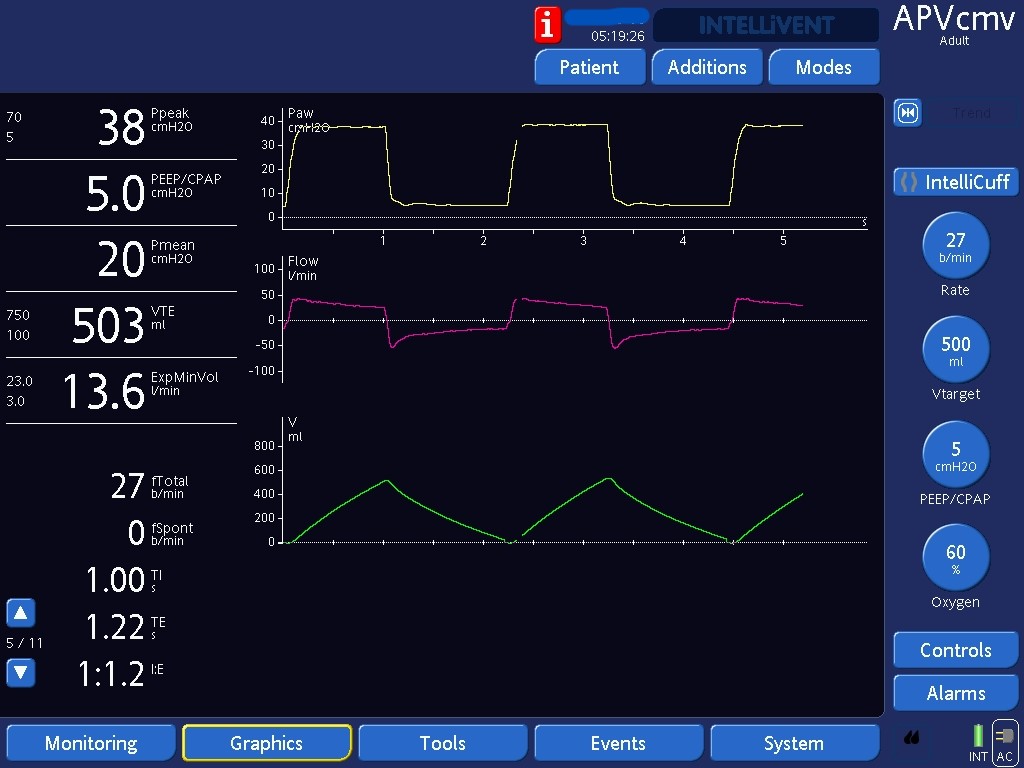
Fig 1.Note how expiratory flows are very small and slow to go back to baseline, indicating a long expiratory time constant and likely increased airway resistance. Due to a concern for possible development of auto-PEEP, the primary team caring for this patient shortened the itime from 1 to 0.5s. What do you think will happen with peak pressures given that the patient is ventilated on APV?
Fig 2.On APV, the ventilator titrates the amount of pressure it applies above PEEP to deliver a certain tidal volume within the itime set by us. Hence, if we drop the itime, the ventilator will have less time to deliver the same volumes, so inspiratory flows will have to be higher. Since APV is a mode delivering pressure-limited breaths, it controls pressure, not flows. To deliver higher flows, it will apply higher levels of pressure above PEEP. Hence, you see higher peak pressures here compared to the last picture taken just 3 minutes before this one.
Preview — work in progress