Educational use only — not medical advice. This is a teaching example and must not be used to guide care of any individual patient. Learn more →

Flow Dyssynchrony/Work Shifting in VC Square Flow with Troubleshooting

Diagnosing flow dyssynchrony off the pressure–time waveform in volume control, and managing it.
VCWork shiftingM2M5⤢ before / after
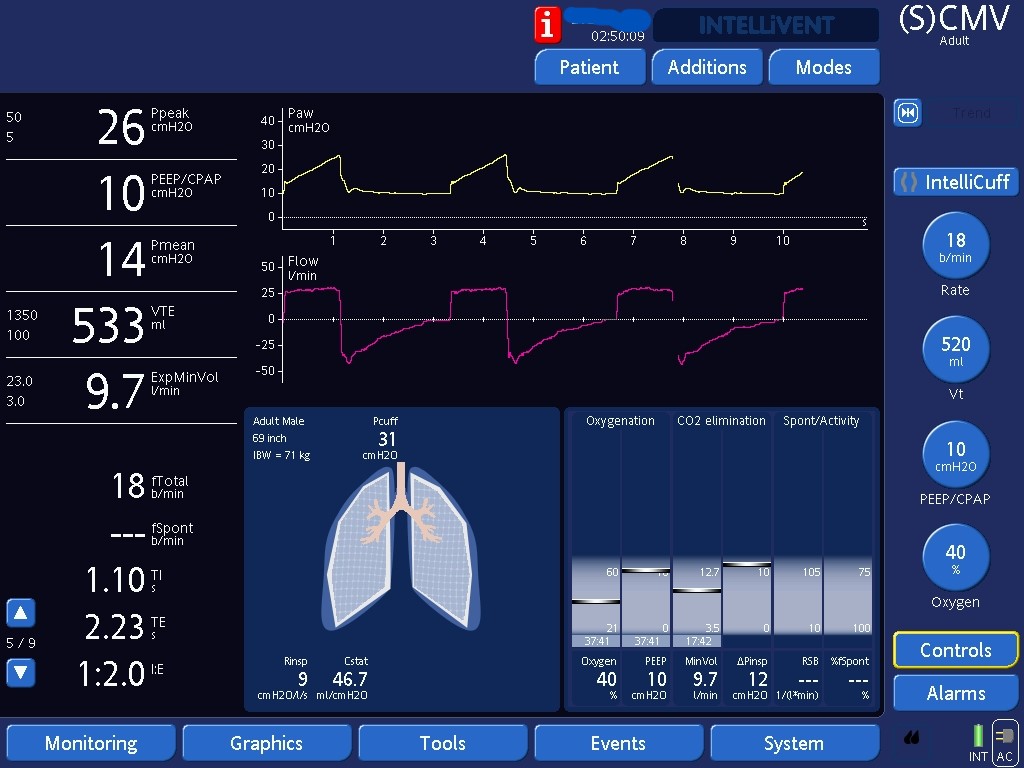
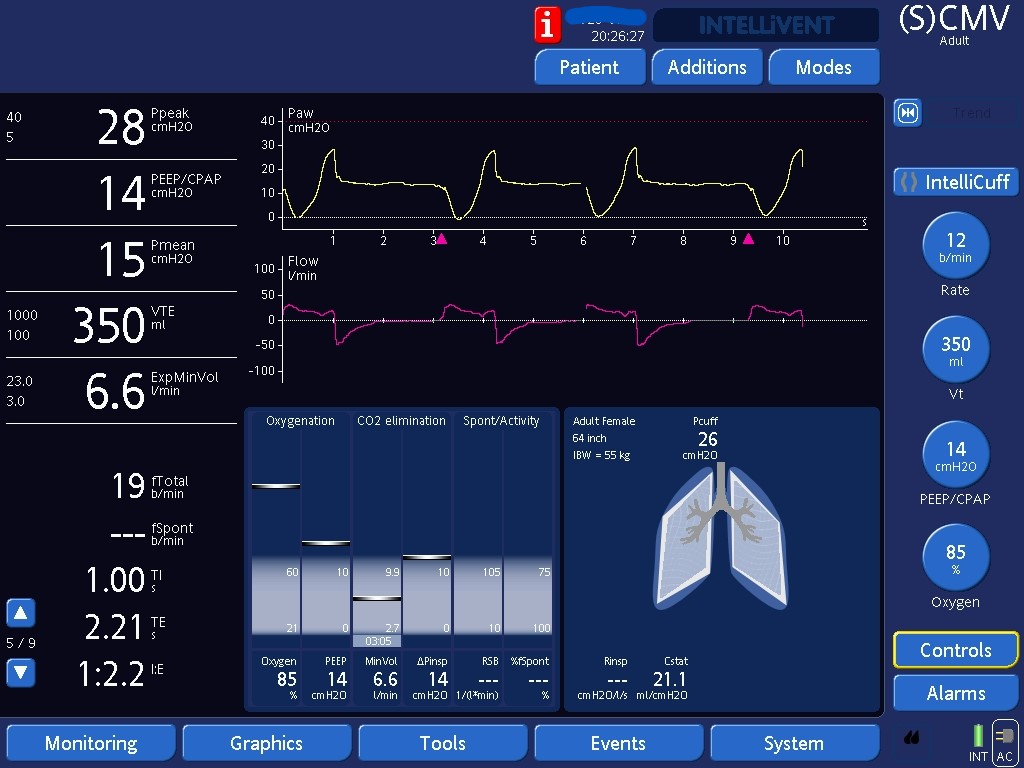
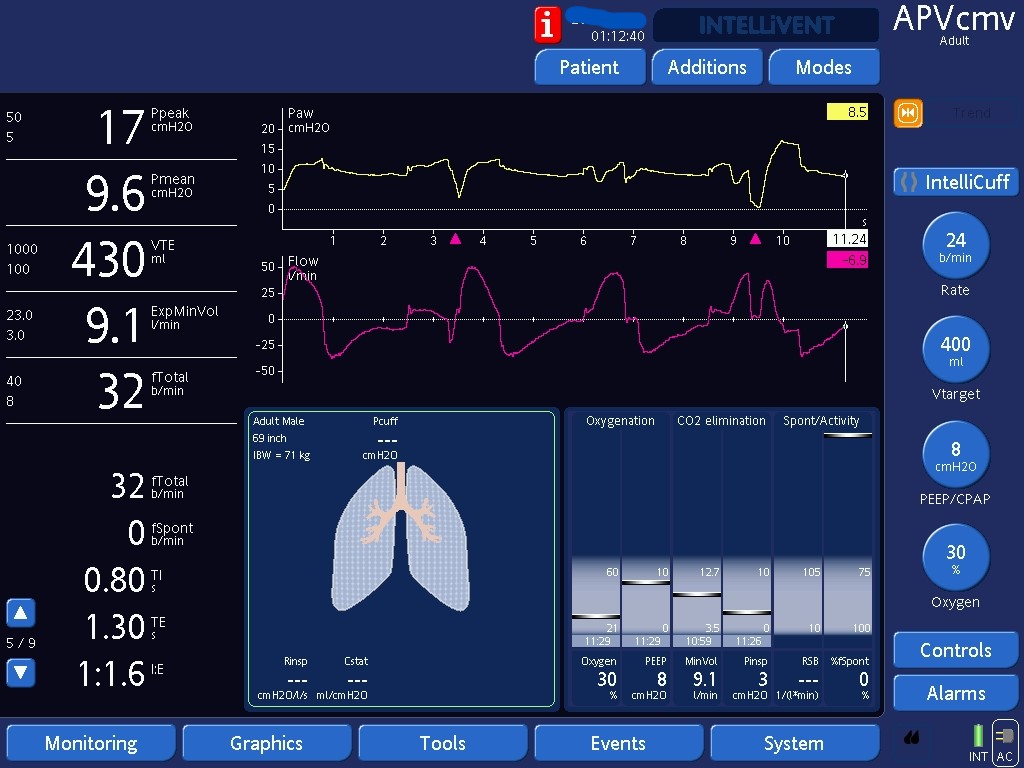
Problem.This patient is ventilated on Volume Control, where flow is the limit variable. Since the ventilator controls how flows are delivered, we do not see much change in the flow-time graph even in the presence of patient effort. This is why we focus on the pressure-time waveform. We should compare the pressure-time graph observed here with what we would expect the patient would have if they were passive (note the next image from a passive patient on the same mode with the same constant flow pattern). Compared to a passive patient, we see a mid-inspiratory negative deflection in the pressure-time graph. A drop in airway pressures indicate patient inspiratory effort. Note how airway pressures drop significantly and even go below PEEP. This happens because the patient wants higher flows (and likely higher volumes) but the ventilator will not allow that on VC, since it is flow-limited. Since flows don’t increase to the drop in intrathoracic pressures, airway pressures drop significantly. Also, since the ventilator will only give enough pressure to achieve the desired flows, if the patient does more effort, the ventilator applies less pressure. This leads to both suboptimal support being given to patients and patient discomfort (since there is a mismatch of desired and delivered inspiratory flows). This scenario is typically called flow dyssynchrony.
Fix #1

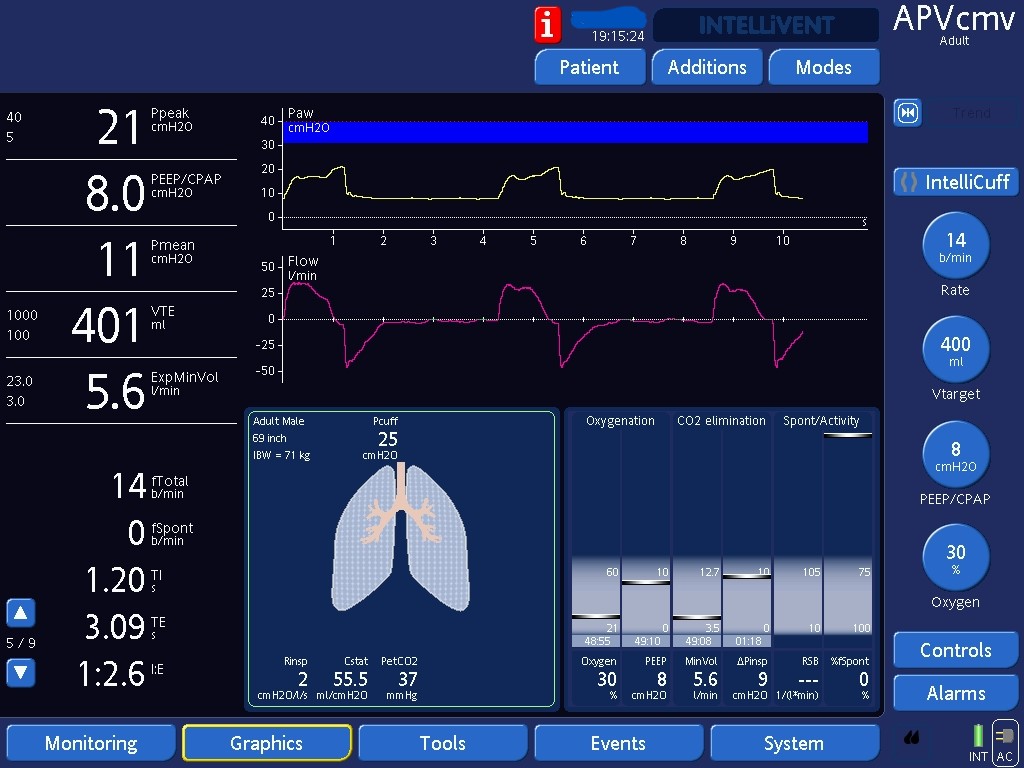
Here you can see how waveforms would look like on VC with constant or square inspiratory flows (we set the flow pattern) in passive patients.
Fix #2

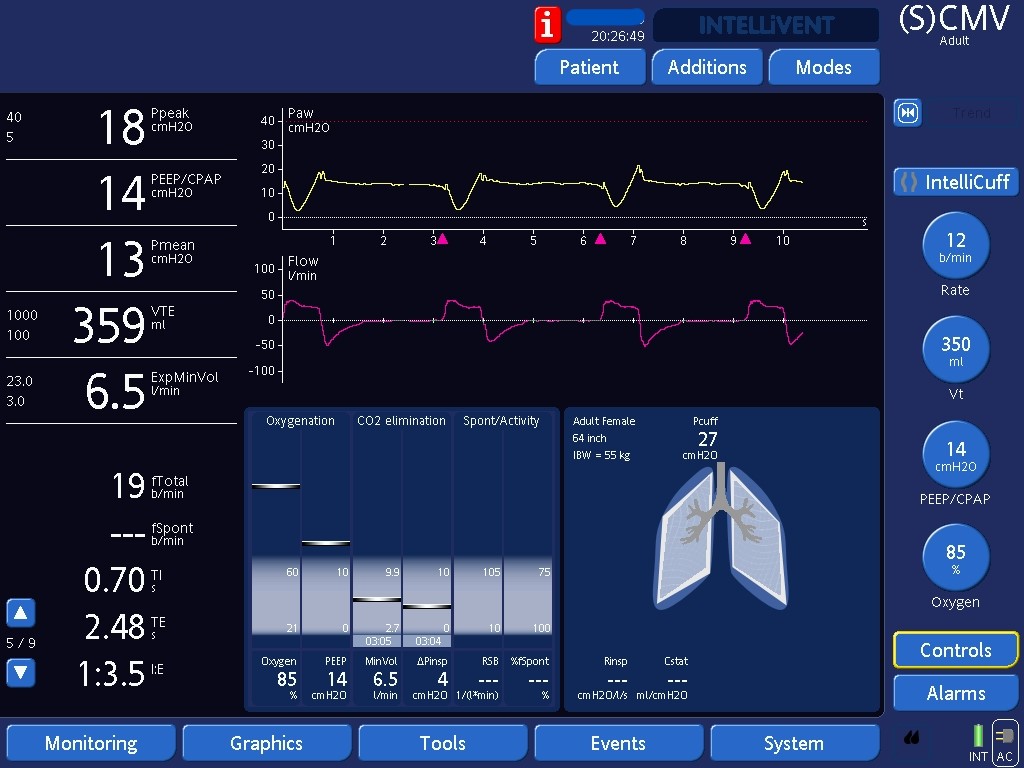
Flow dyssynchrony increases work of breathing and should be corrected when present. Several strategies exist, and the most appropriate one depends on the clinical scenario. One approach is to increase inspiratory flows. On this ventilator, we cannot set flows directly but can increase them by shortening the inspiratory time (iTime). In this example, we decreased the iTime from 1s to 0.7s, which increased flows. Note how the mid-inspiratory deflection in airway pressure is less evident. If the high respiratory drive is due to low tidal volumes, one could attempt increasing tidal volumes. With a constant iTime, higher tidal volumes increase flows. Alternatively, placing the patient on a pressure-limited mode where the patient has more control over inspiratory flows could be attempted, but typically tidal volumes will also increase. If lung protective ventilation demands low tidal volumes, the best next step would be increasing sedation to take away the demand for high flows/volumes.
Preview — work in progress