Educational use only — not medical advice. This is a teaching example and must not be used to guide care of any individual patient. Learn more →

Failed Trigger in Patient with Esophageal Pressure Monitor

Esophageal pressure waveform confirming failed triggering inferred by a positive deflection in expiratory flows failing to initiate an inspiration.
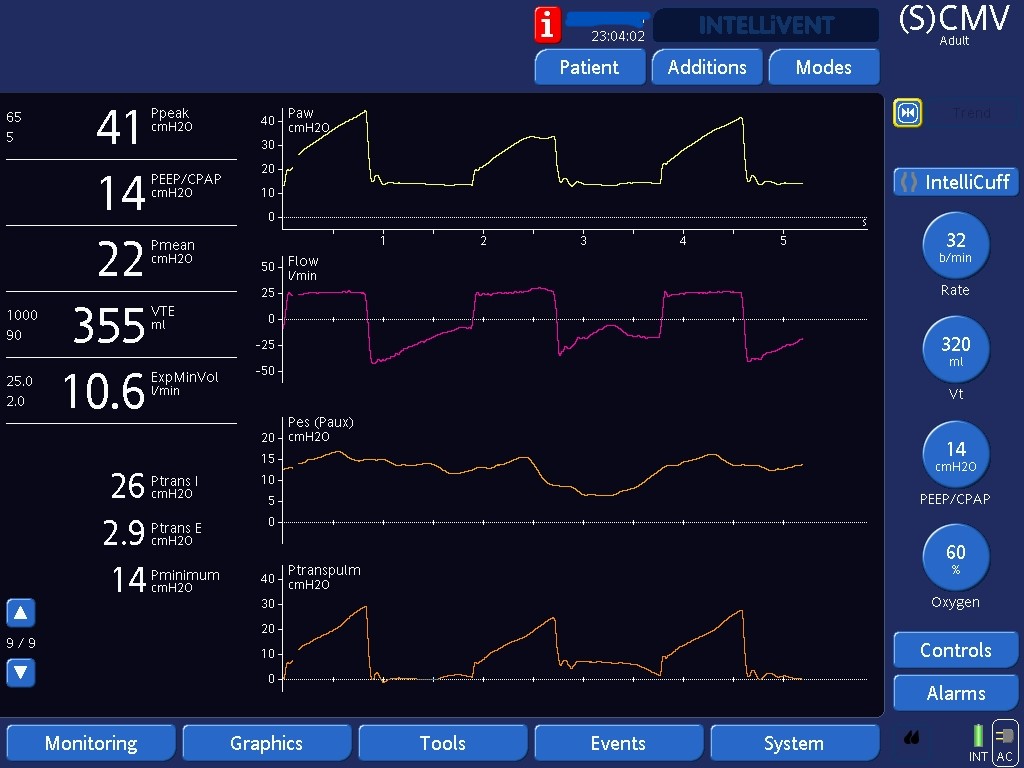
Failed triggerEarly triggerM1M5
Fig 1.The ventilator initiates a breath when a defined trigger variable indicates patient inspiratory effort. In this case, the trigger variable used was flow with a threshold of 5 L/min. Inspiratory muscle activation leads to a drop in intrathoracic pressure, and to the generation of inspiratory flow (positive flow, from the ventilator to the patient) which would prompt a machine-triggered breath. Between the second and the third breaths we can see a positive deflection in the expiratory portion of the flow-time graph that does not lead to a new breath. This is enough to call this a failed trigger. However, this patient also had an esophageal manometer, which estimates pleural pressures. Concomitant with the positive deflection in flows we see a drop in pleural pressures, confirming our suspicion that the patient was trying to inhale (pleural pressures drop secondary to chest expansion from inspiratory muscle activity). Of note, this case would be better classified as early trigger since we see evidence of inspiratory effort starting in mid-inspiration. However, it still provides a "failed trigger" teaching point because the inspirator effort that extended into expiration was unable to trigger a second breath.
Preview — work in progress