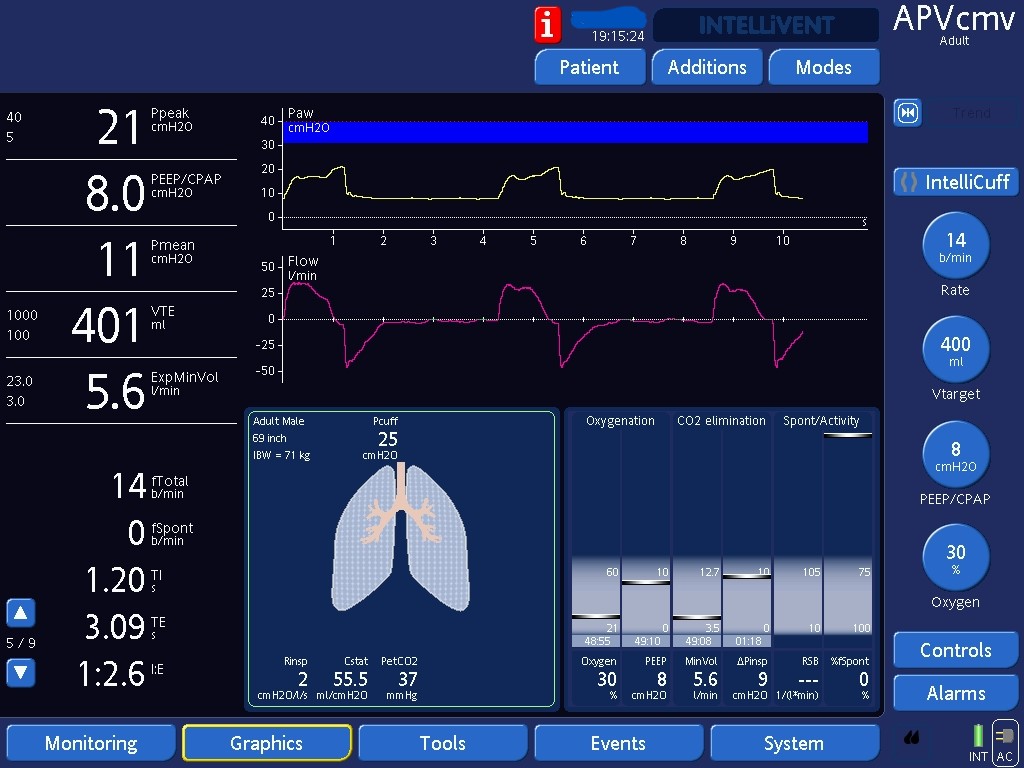
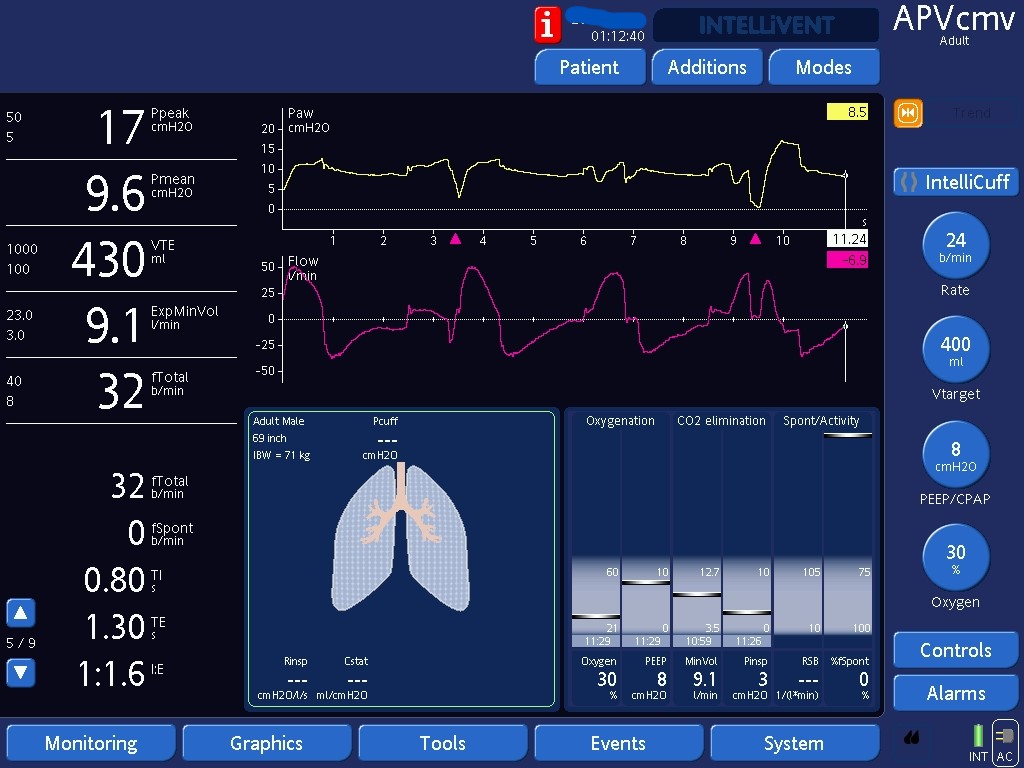
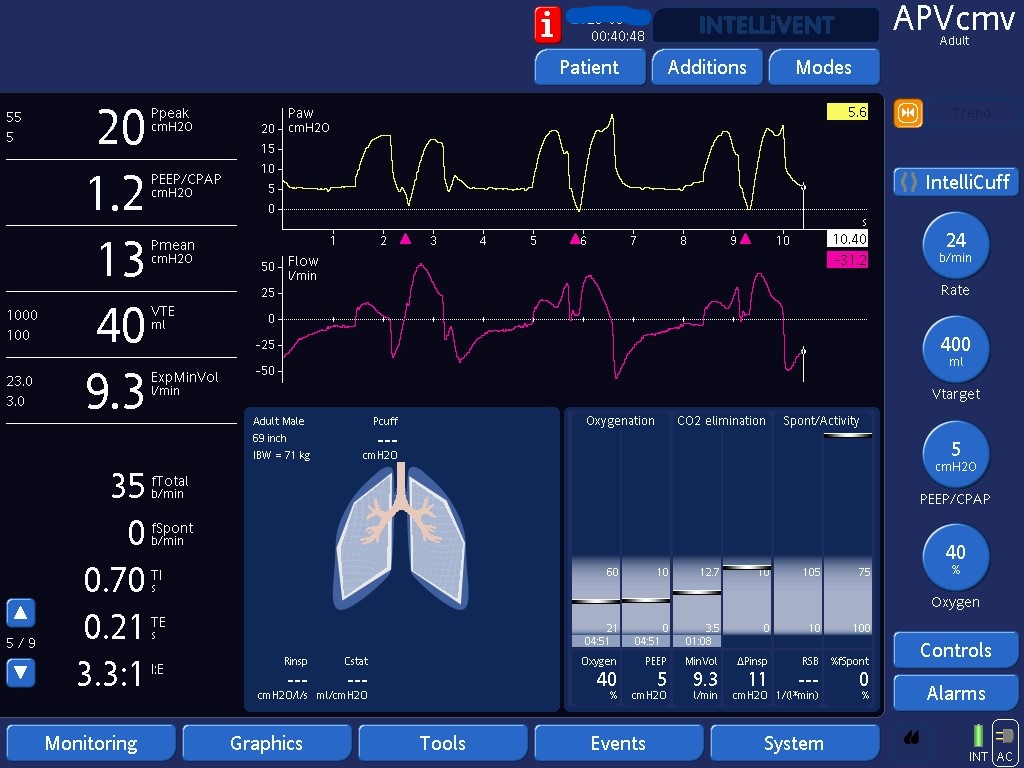
Failed or Ineffective Trigger in a Patient with Neuromuscular Weakness
Diagnosis and treatment of ineffective triggering from neuromuscular weakness.
Note three instances (one between the 1st and 2nd breaths and two between 2nd and 3rd breaths) of positive deflections on the expiratory portion of the flow-time waveform accompanied by negative deflections of the pressure-time waveform. These are due to patient inspiratory effort. The patient is, however, unable to generate enough flows to meet the trigger sensitivity threshold (set to default of 5L/min on this ventilator) in this case due to neuromuscular weakness. Treatment is to decrease both the sensitivity threshold and depth of sedation.
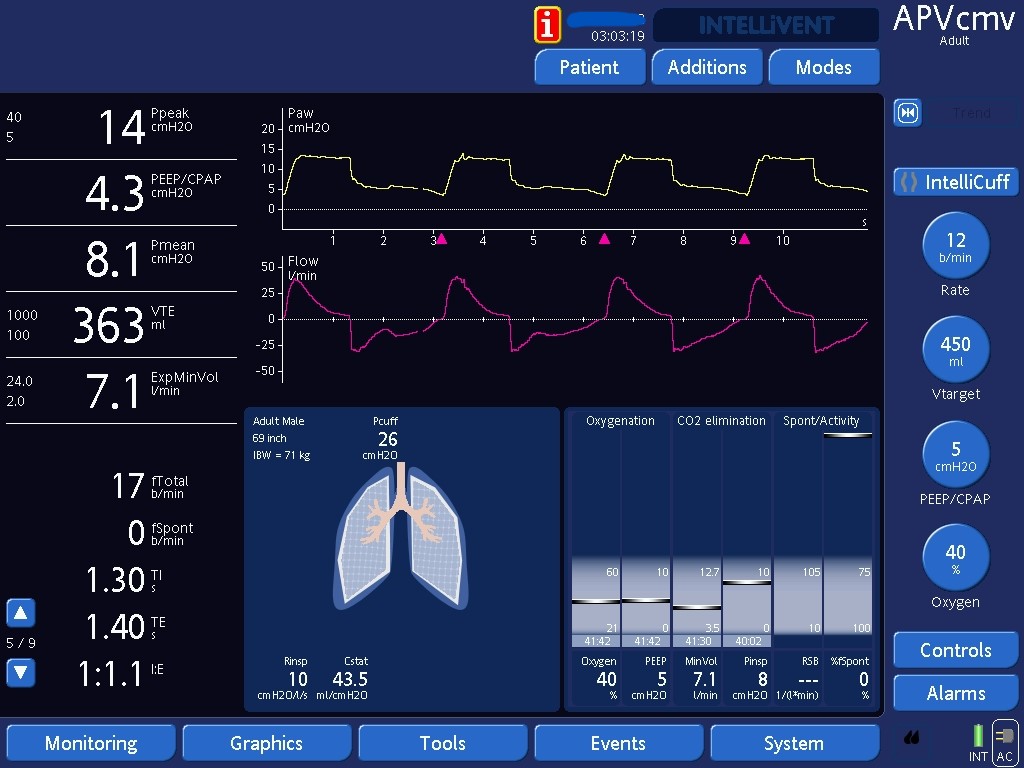
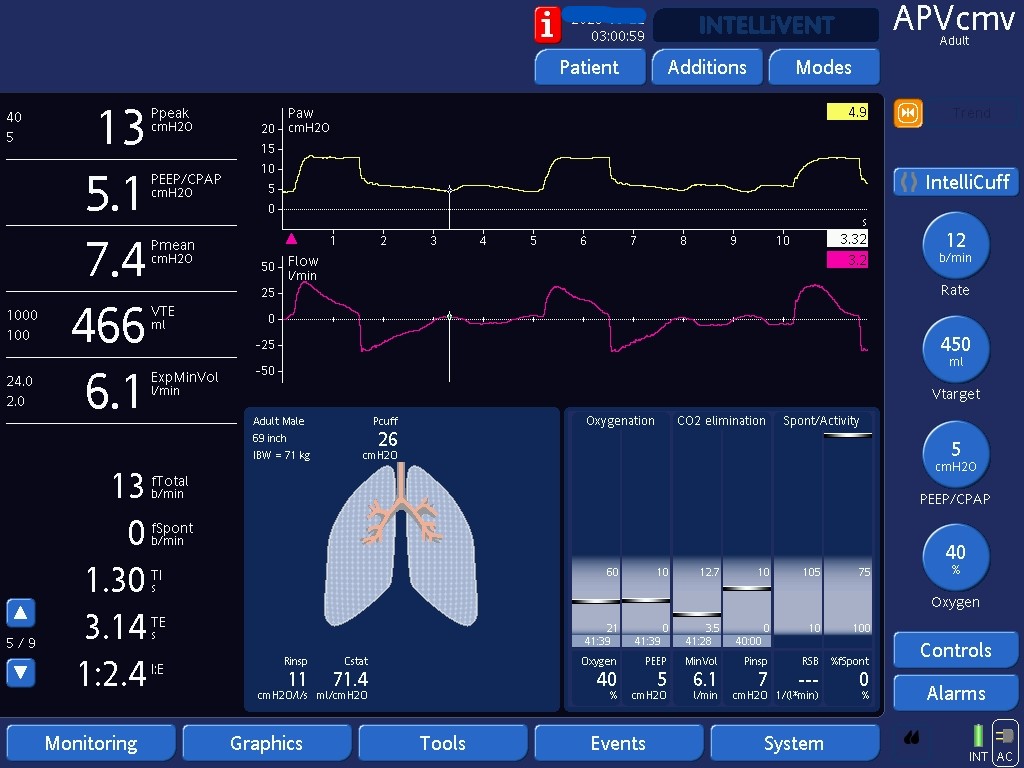
Although we still have a few positive deflections in the expiratory portion of the flow vs time waveform for the first couple of breaths, we see a large improvement in failed triggering as evidenced by an increase in patient-triggered breaths (marked with purple arrowhead) and higher actual rate (on the left side, now 17 breaths/min).