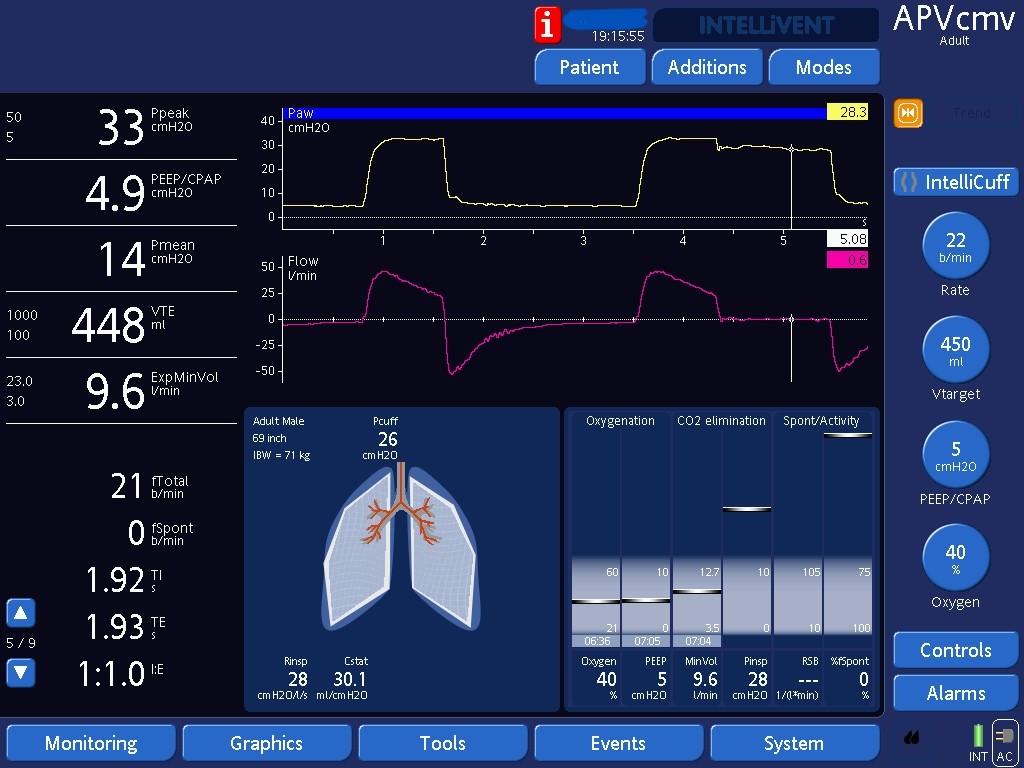
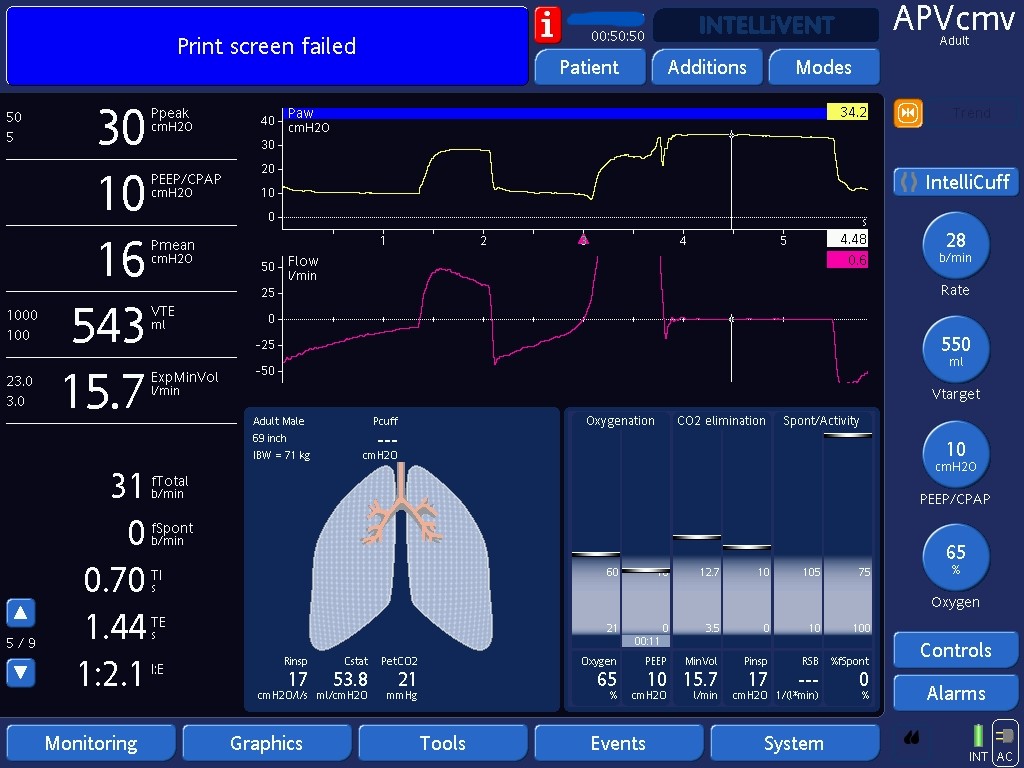
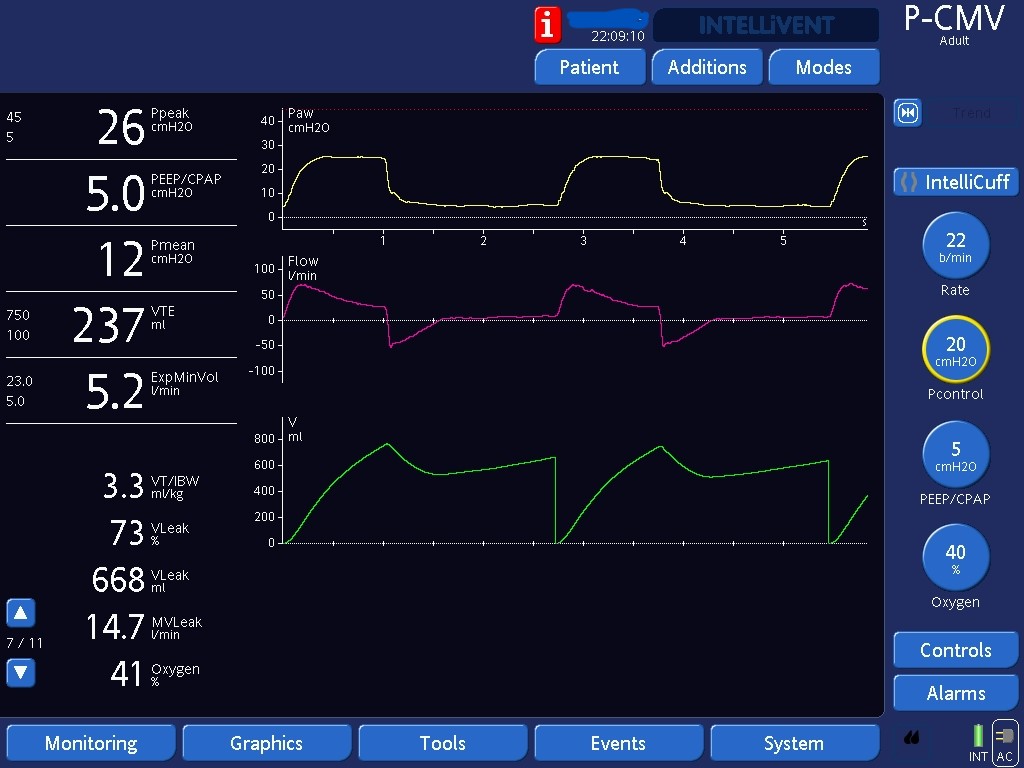
Effects of Kink in Endotracheal Tube
Impact of a kink in the endotracheal tube — and what happens on an adaptive mode when it is relieved.
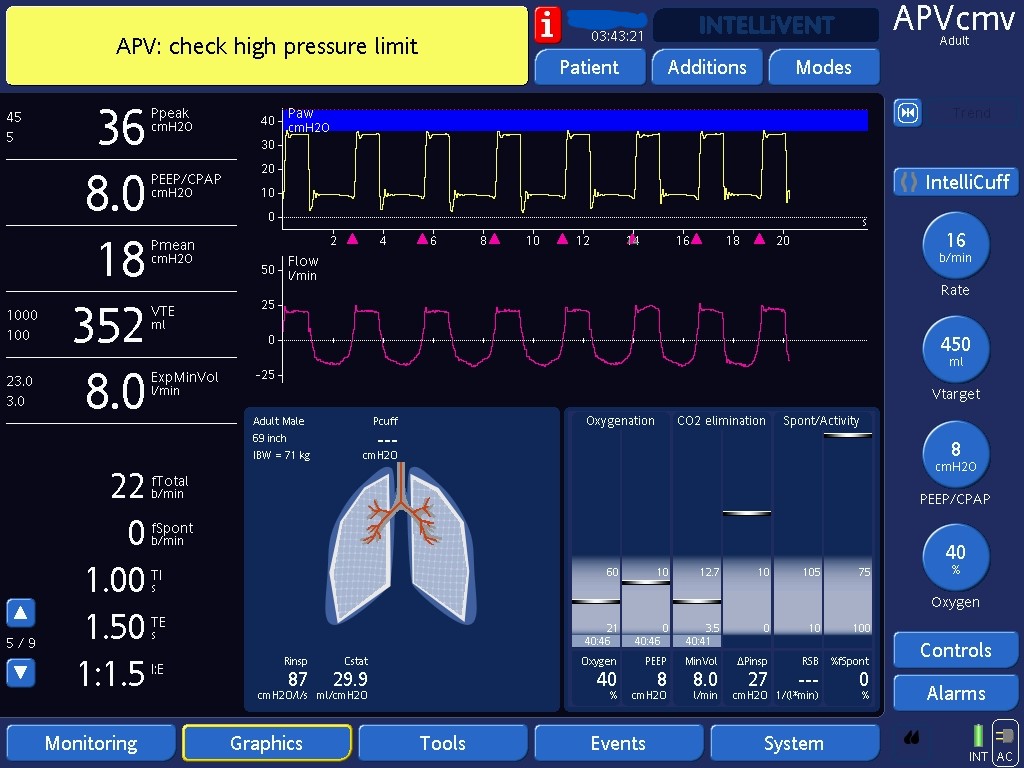
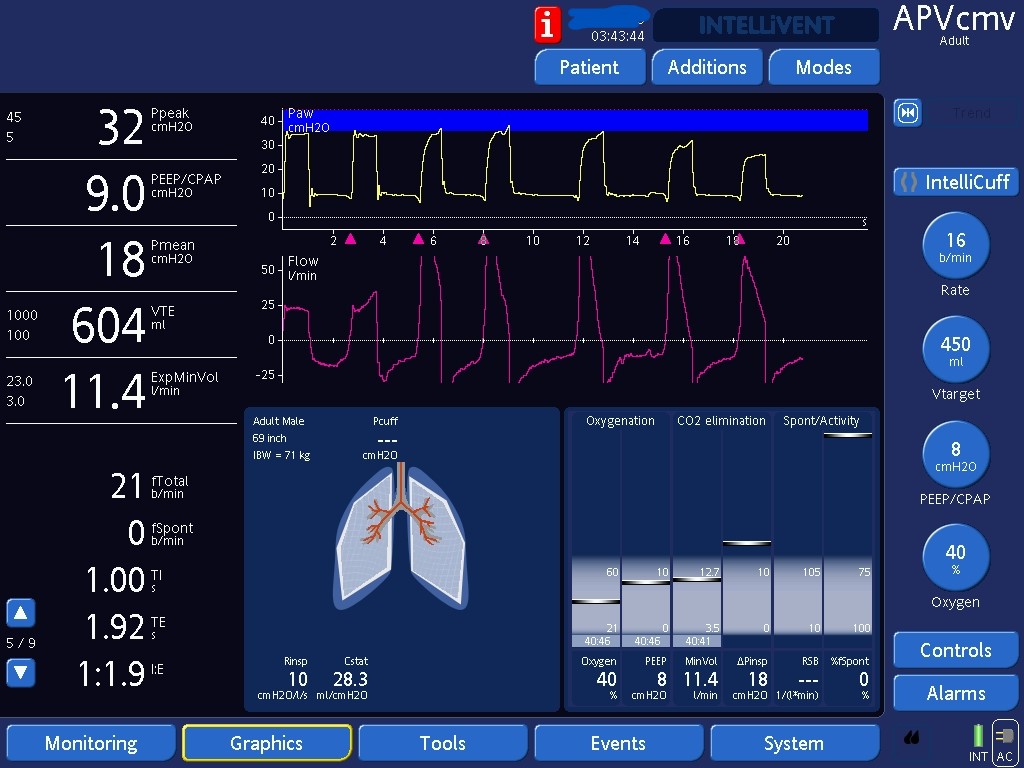
This patient had increased airway resistance due to a kinked endotracheal tube. This results in elevated peak pressures as the ventilator must generate higher pressure to deliver the target tidal volume through the kinked tube. Once the obstruction was relieved, airway resistance suddenly decreases and the same pressure that had been applied to achieve target tidal volume will generate much higher volumes. Note how the area under the curve of the flow waveform increased suddenly on the third breath (the kink was relieved after the second breath). Because in APV, applied inspiratory pressure is titrated by the ventilator to achieve a target tidal volume, the ventilator then reduces inspiratory pressure over subsequent breaths to return to the targeted tidal volume.
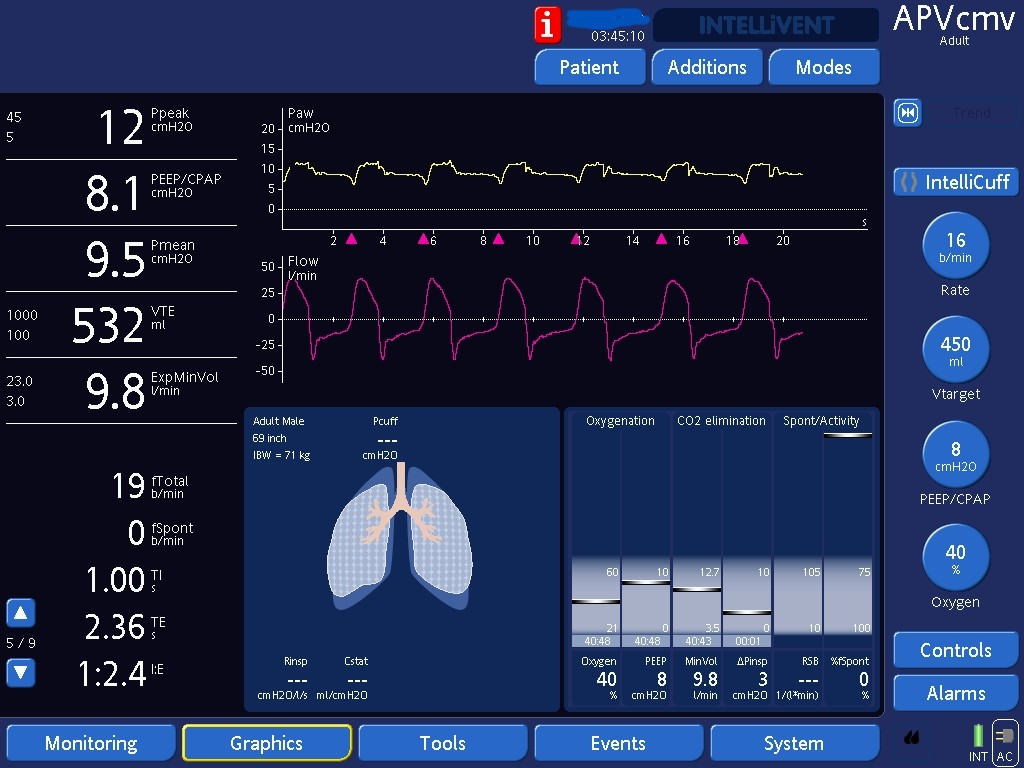
Following correction of the obstruction, peak pressures decreased.