Educational use only — not medical advice. This is a teaching example and must not be used to guide care of any individual patient. Learn more →

Early Cycle in Pressure Support 2

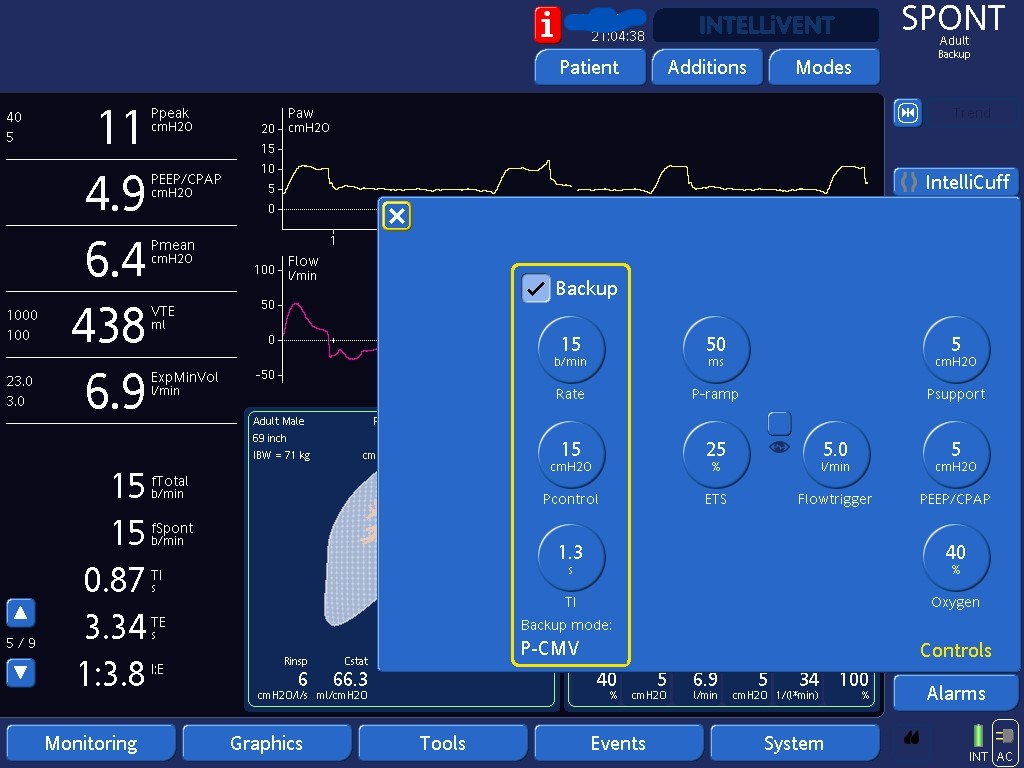
Correcting early cycling in pressure support by lowering the expiratory trigger sensitivity to lengthen inspiration.
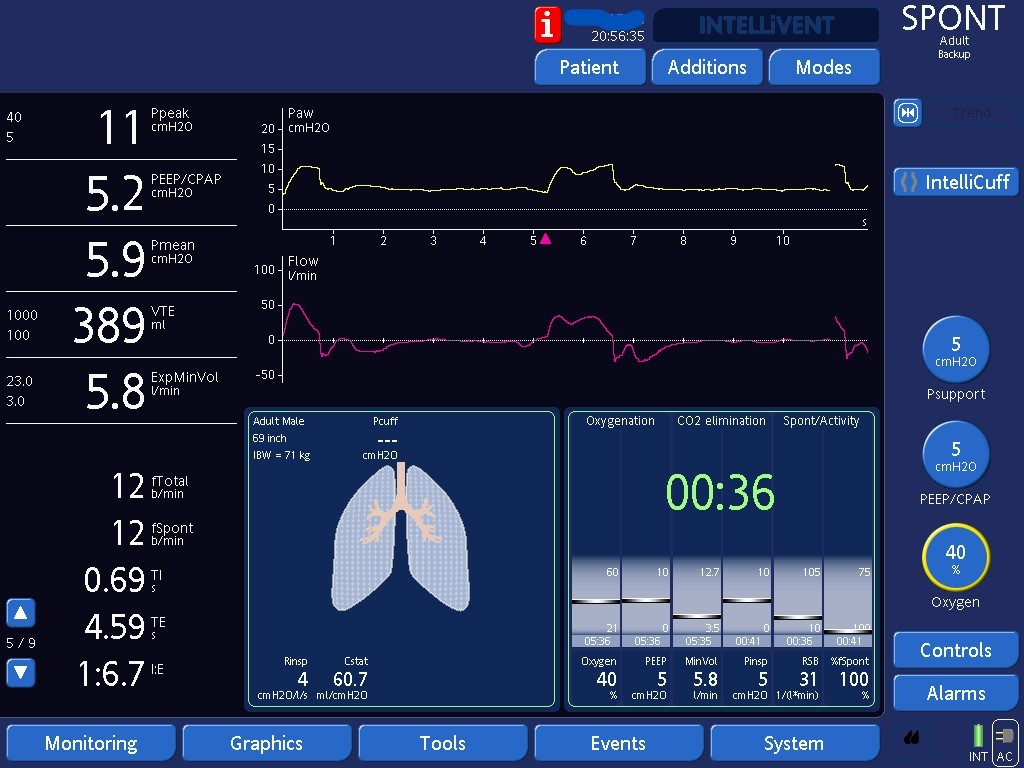
PSVEarly cycleM2M5⤢ before / after
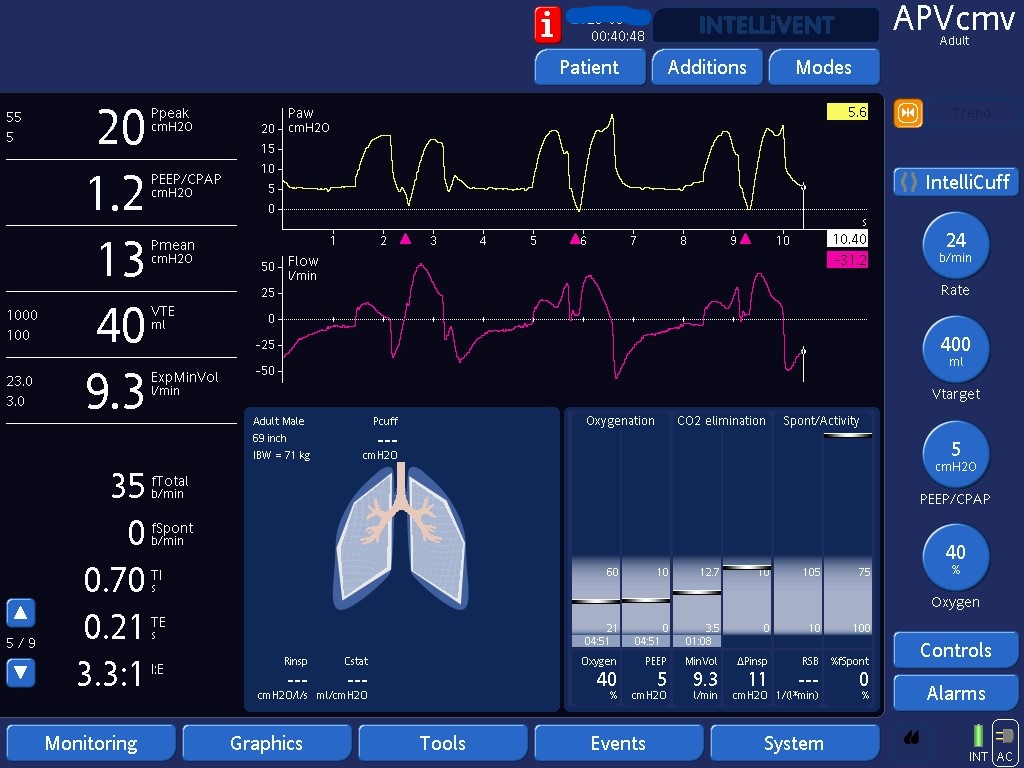
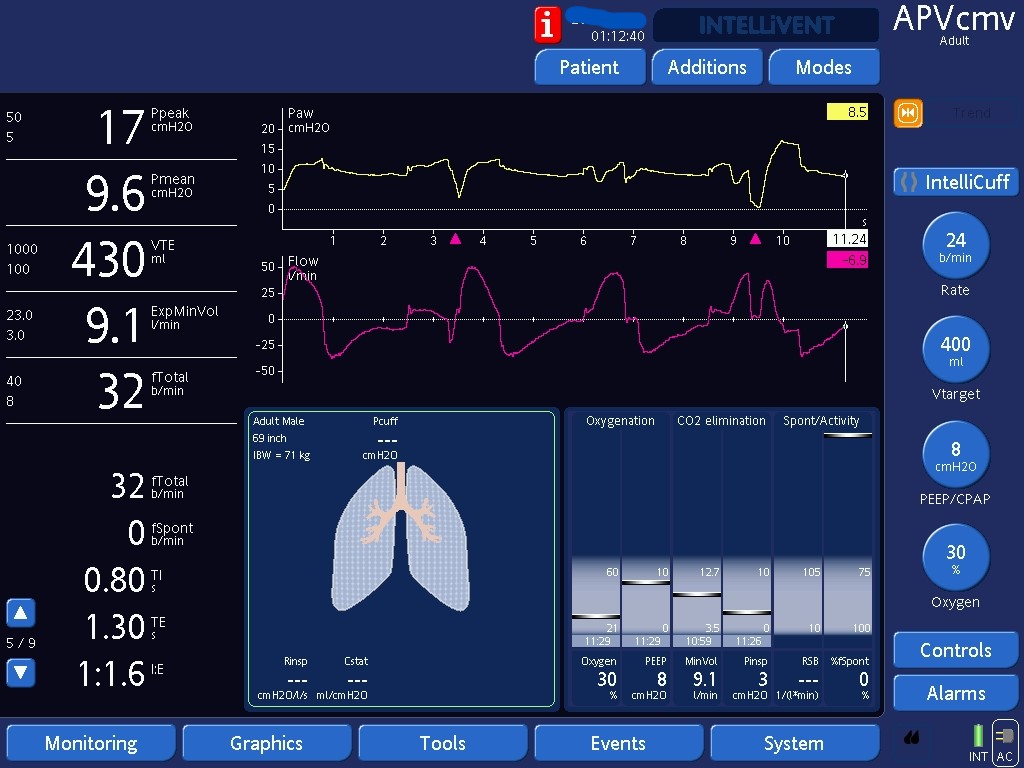
Problem.Expiratory flows are driven by the pressure differential between the alveolus and the airway opening. Regardless of the mode, passive expiration will have expiratory flows following an exponential decay pattern. This pattern is characterized by high initial flows (alveolar pressure is highest early on in expiration since lungs are full with tidal volume) that decrease as alveolar pressures drop with emptying of the previously delivered tidal volumes. The exponential decay pattern is characterized by a downward concavity in expiratory flows (see Case "Late Cycle in Pressure Support"). In this tracing, expiratory flows show an early positive deflection immediately after exhalation begins. This positive deflection in flows indicates inspiratory effort that is happening in the beginning of expiration, which in this case is secondary to a cycle variable that is set shorter than the patient’s true (or neural) inspiratory itime (i.e., early cycle). If patient effort is strong enough, they will occasionally trigger a second breath leading to double triggering or breath stacking.
Fix #1

Since this patient is on PSV, how would you change the iTime?

Fix #2
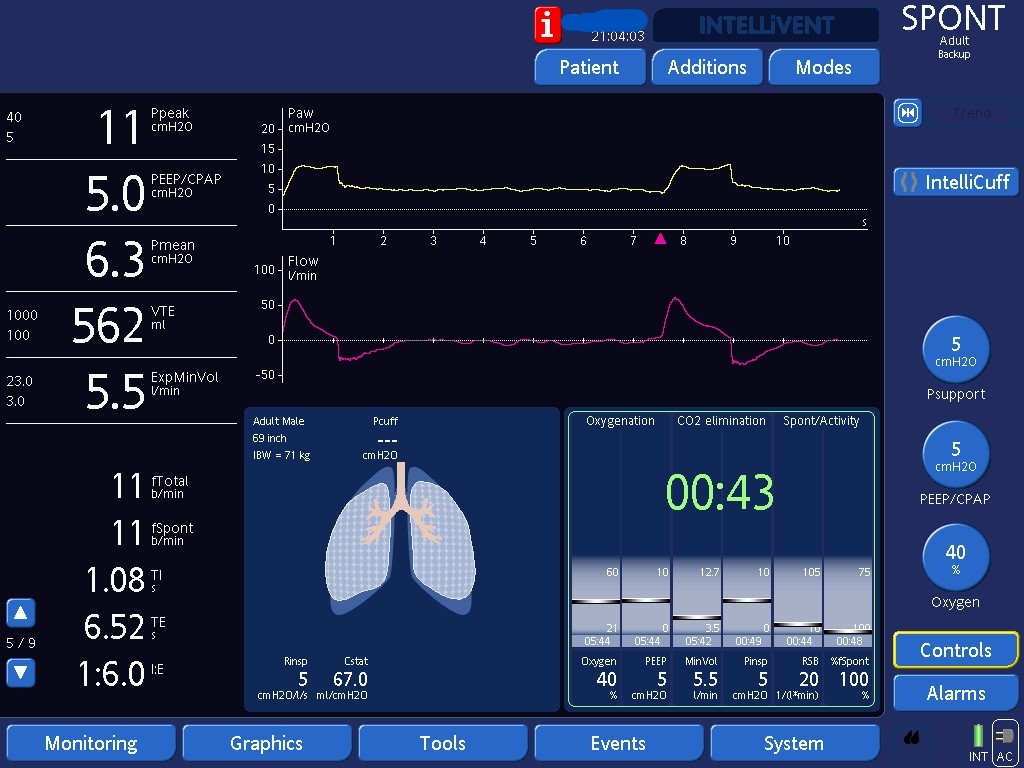
To correct early cycling in PSV, lengthen inspiratory time by lowering the Expiratory Trigger Sensitivity (ETS). Reducing the percentage of peak inspiratory flow at which the ventilator cycles (for example, from 25% to 10%) allows inspiration to continue longer.
Preview — work in progress