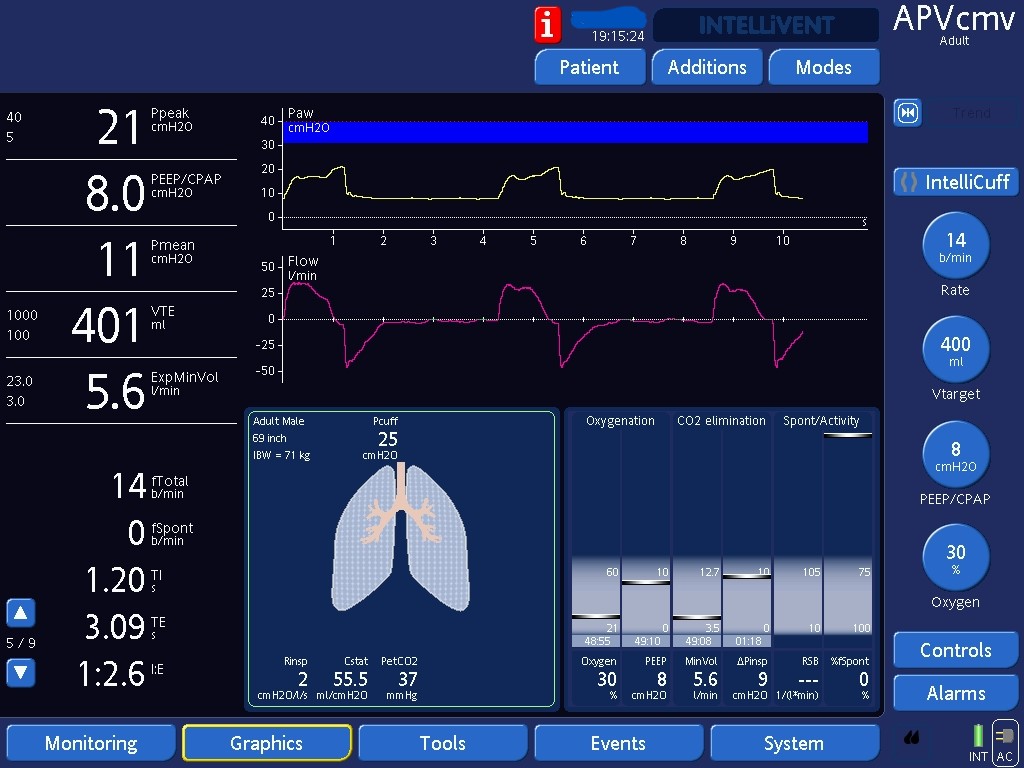
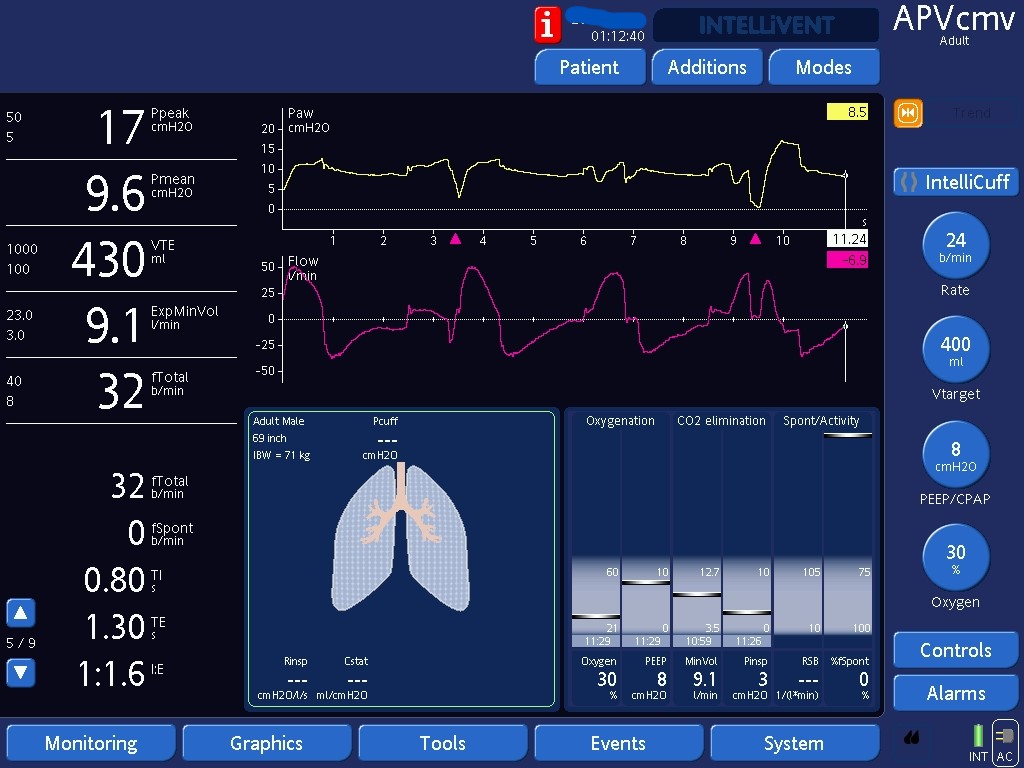
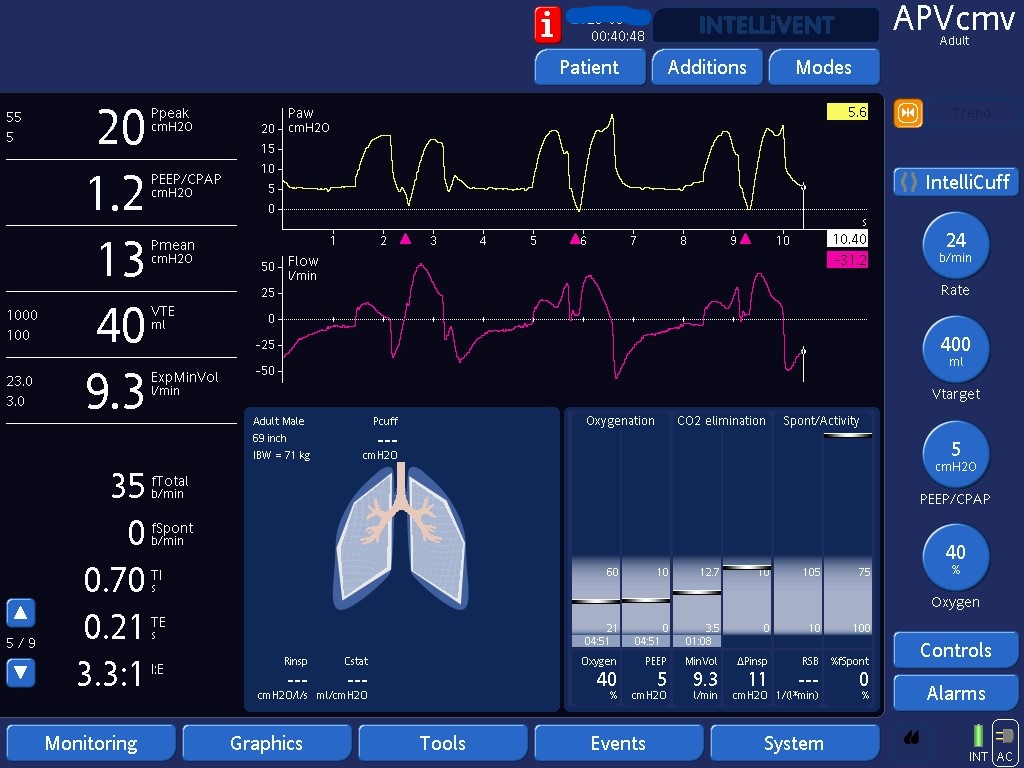
Discerning True versus False Trigger
The use of an expiratory hold to confirm whether a patient-trigger event is a true patient-trigger vs a false trigger event.
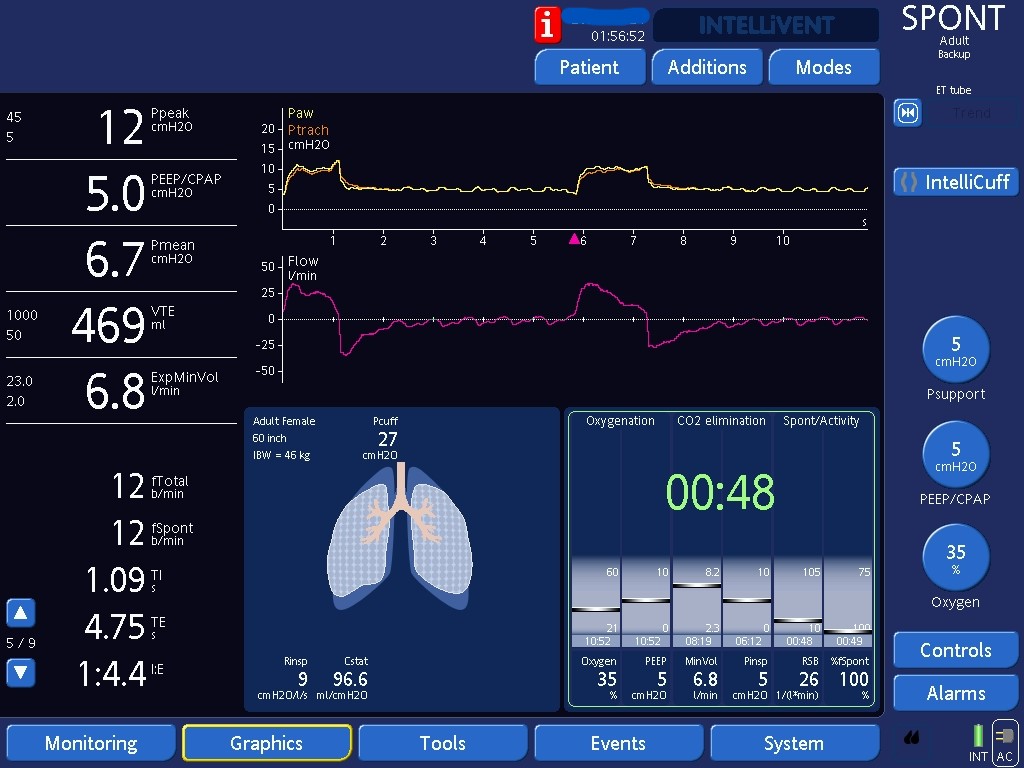
We see small rhythmic oscillations in our waveforms secondary to heartbeats. These are called cardiac oscillations, which can be a cause of false trigger events. A false trigger occurs when the inspiratory trigger threshold is met secondary to a factor other than patient inspiratory effort. For example, we may set the ventilator to trigger a new inspiration when flows of +2L/min during expiration are detected (typically this would be a sign that the patient is starting to contract inspiratory muscles). However, if the cardiac oscillations have enough amplitude to generate positive flows of >2L/min, this may be interpreted as a patient-initiated breath by the ventilator. Note that this ventilator marks patient-triggered breaths with a triangle beneath the pressure versus time waveform. See next picture.
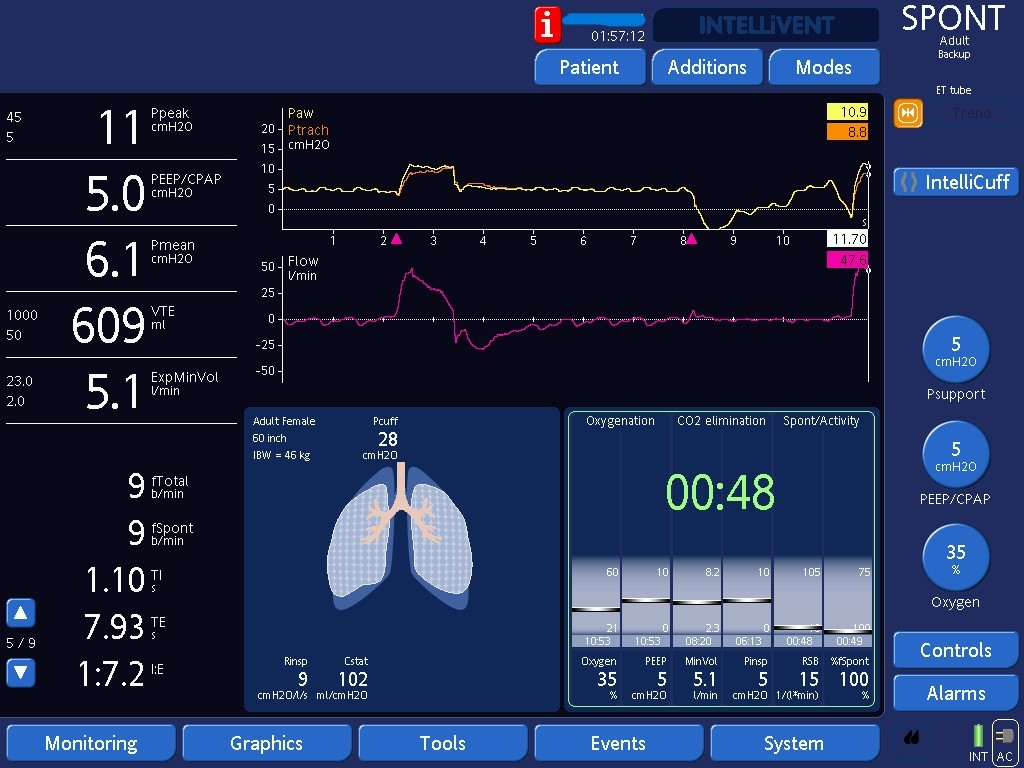
We can differentiate false triggering from a true patient-initiated trigger by patient inspection. In dubious cases, an expiratory hold maneuver can be performed. During this hold maneuver, the inspiratory valve will be closed, so patient inspiratory effort will not be accompanied by flows, which will lead to a conspicuous drop in airway pressures, as you see after the second triangle in this picture. So the trigger events seen in the prior picture were true patient-initiated trigger events.