Consequences of Double Triggering in VC
How double triggering in volume control stacks tidal volumes and drives plateau pressures dangerously high.
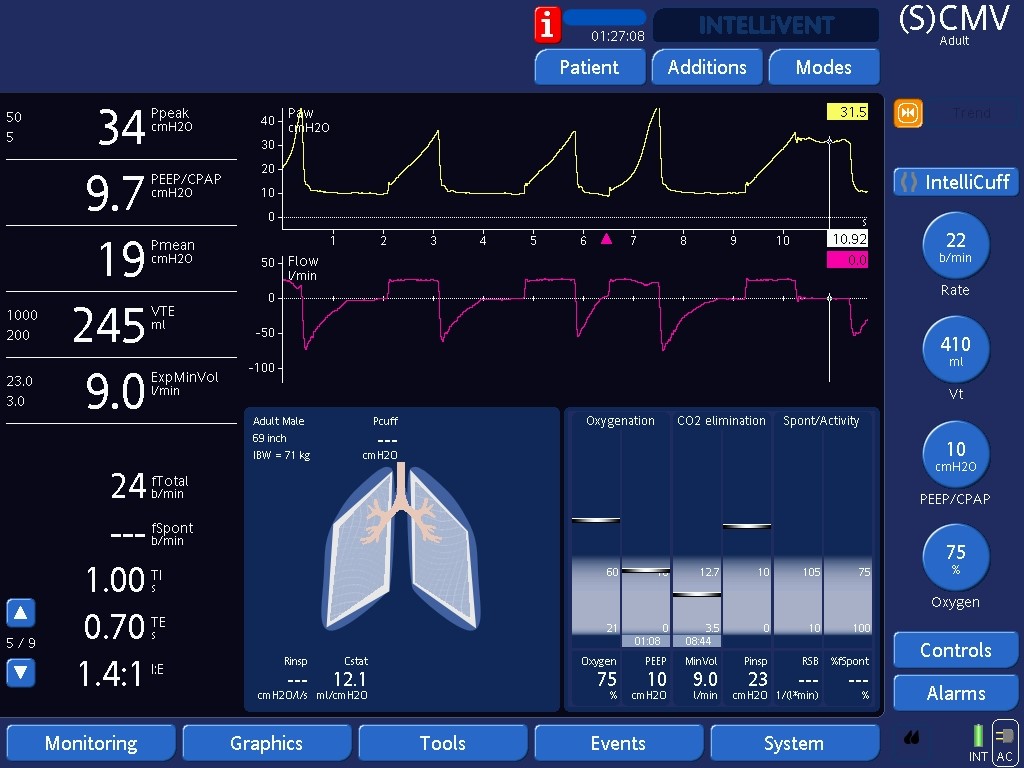
Patient on VC with constant flows. Note the plateau pressure of 31cmH2O. See the next image.
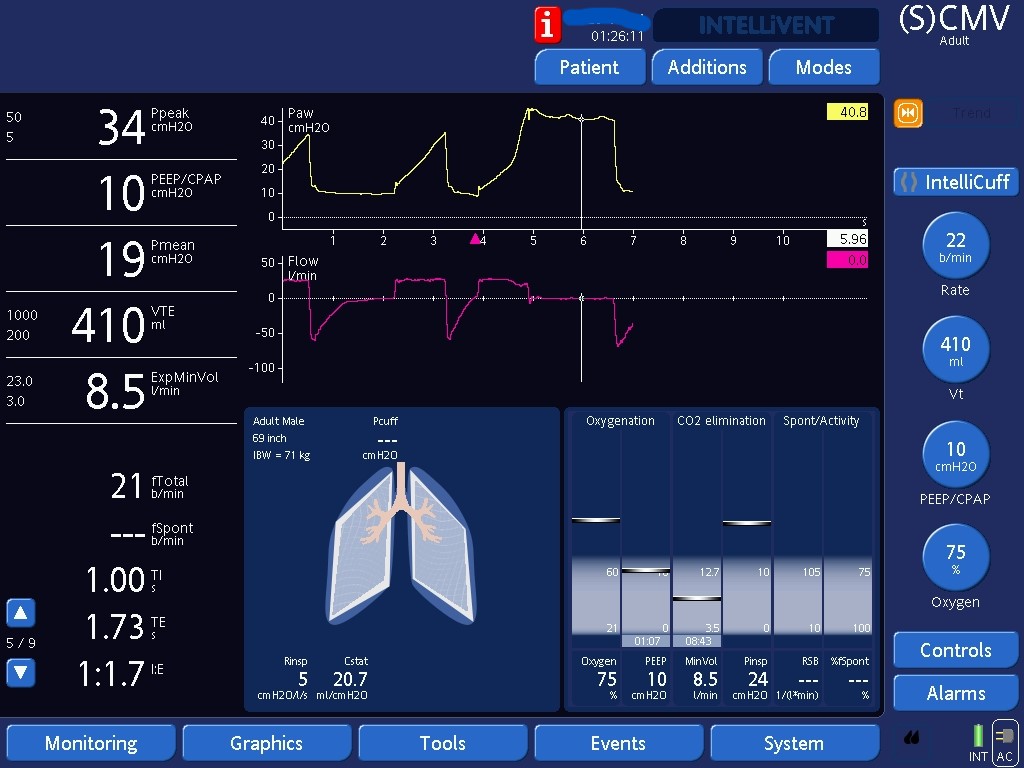
Note how the second breath of this double trigger event, which is triggered by the patient, happens shortly after expiration starts from the prior breath. Not enough time had elapsed for the previously delivered tidal volume to be exhaled. Since target flows will be achieved for the duration of inspiratory time in VC, the second breath will deliver the set tidal volume, even if the ventilator must apply significantly high pressures. Double triggering in VC will then lead to effective tidal volumes that may be as high as double of what has been set. Note how plateau pressures after the second, stacked breath, are much higher than in the prior image. This happens because the volume of gas in the lungs is much higher in this breath (non-exhaled tidal volume from the prior breath plus the delivered tidal volume from this breath).